

In a bold step toward preparing future‑ready generations, Saudi Arabia outcome based education has taken centre stage as a trans-formative force in the Kingdom’s national education reform. The Harvard Business Review Arabic recently highlighted how Saudi Arabia is shifting from a traditional model of teaching based on content delivery to an outcome‑driven approach that aligns classroom learning with real‑world skills and future labour market demands.
This sweeping reform is part of the Kingdom’s broader Vision 2030 strategy, which aims to build a knowledge‑based economy founded on innovation, digital fluency and human capital. What does this mean for students, educators, and society? How is outcome‑based education reshaping learning in Saudi Arabia? In this article, we explore the scope, significance, and impact of this educational transformation.
What Is Saudi Arabia Outcome Based Education?
Outcome‑based education (OBE) shifts the focus from what is taught to what students are expected to learn, demonstrate, and achieve. Rather than measuring success through rote memorization or time spent in class, OBE assesses students on clear, measurable competencies — such as problem‑solving, communication skills, digital literacy, innovation, and critical thinking.
In this system:
- Every classroom activity links directly to student learning outcomes.
- Students must demonstrate competencies before moving forward.
- Assessments are designed to show real mastery, not just memorization.
For Saudi Arabia, this represents a significant shift — from an input‑focused model (how much content students cover) to an impact‑oriented model (how well students can apply knowledge and skills in real life).
Why This Change Matters
Bridging the Gap Between School and Work
Traditional education models often leave students with academic knowledge but without the key transferable skills needed in today’s economy. Outcome‑based education changes that. By tying classroom learning directly to measurable competencies, Saudi Arabia is preparing students to succeed in:
- Digital and technology sectors
- Creative and innovative industries
- Global business environments
This alignment addresses a common global challenge: the mismatch between what students learn in school and what employers demand in the workplace. The Kingdom’s new strategy aims to overcome this by embedding real‑world skills into every level of education.
Saudi Arabia’s Vision 2030: Education at the Core
Outcome‑based education is woven into Vision 2030, Saudi Arabia’s ambitious blueprint for national transformation. Launched in 2016, Vision 2030 aims to diversify the economy, reduce dependence on oil, and position citizens as the drivers of a modern, knowledge‑based economy. Education is foundational to this plan — without preparing capable, future‑ready generations, none of these goals can be fully realized.
Some key education priorities under Vision 2030 include:
- Building competencies that support economic diversification
- Modernizing curriculum and assessment practices
- Increasing investment in digital and tech‑driven education
- Encouraging private and international education partnerships
Through this vision, Saudi Arabia is not just teaching children — it is empowering them to think, innovate, and adapt in an ever‑changing world.
The Role of Al‑Nobala Schools and Learning Outcomes Framework
A powerful example of this shift is the work of Al‑Nobala Private Schools, which pioneered a national learning outcomes framework in the Kingdom. This framework connects every aspect of instruction to defined competencies that students must achieve, such as:
- Critical thinking and reasoning
- Communication and collaboration
- Digital literacy and technological fluency
- Creativity and innovation
Al‑Nobala’s approach is not an isolated initiative; it illustrates how private institutions can drive innovation while aligning with national goals. By collaborating with international experts and adapting best practices to local contexts, Al‑Nobala has shown how outcome‑based education can serve as a model for schools throughout Saudi Arabia.
Government Support: From Central Control to Strategic Enablement
Saudi Arabia’s Ministry of Education played a critical role in enabling this shift. The ministry’s evolving philosophy reflects a transition:
- From centralized curriculum control
- To a strategic enabler that supports schools in designing meaningful, context‑relevant learning experiences
This change gives educators greater flexibility to tailor teaching practices while ensuring that learning outcomes remain nationally consistent and globally competitive. It also allows innovative private and public schools to pilot new approaches — forming testbeds for broader reforms.
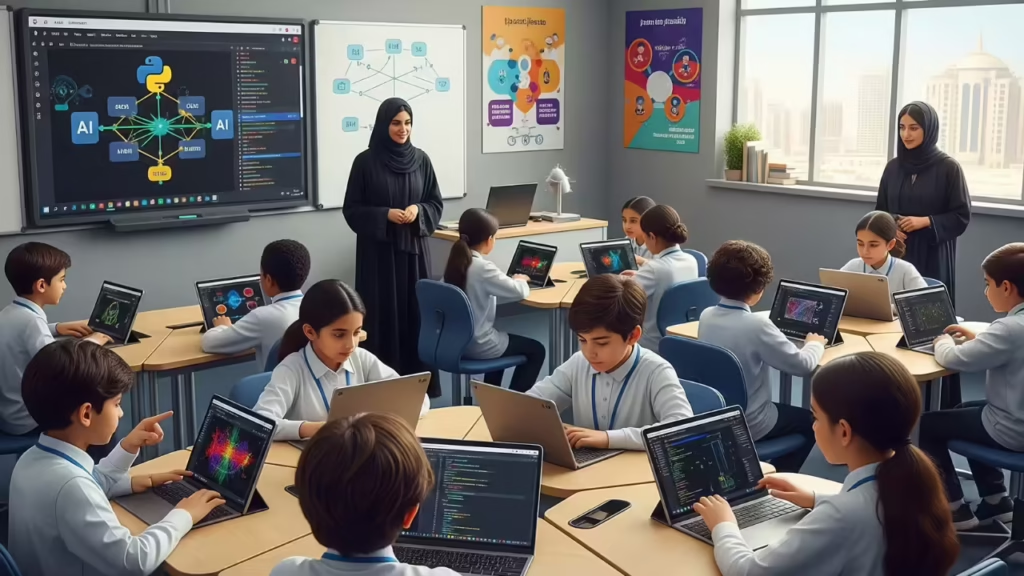
Preparing Students for a Digital, AI‑Driven Future
Being future‑ready means equipping learners with skills that transcend traditional subject boundaries. Across Saudi Arabia, curriculum reforms are increasingly integrating:
Technology and Digital Literacy
National education initiatives include comprehensive AI curricula and digital skills training for millions of students, recognizing the central role of technology in tomorrow’s workforce. These efforts place Saudi students ahead of global trends by ensuring they understand, create, and interact with emerging technologies like artificial intelligence from an early stage.
Critical Thinking and Problem Solving
Traditional ranking and memorization are no longer sufficient in a world where information is abundant and rapidly changing. Outcome‑based education prioritizes skills like logical reasoning, analytical thinking, collaboration, and adaptability — all essential for lifelong learning and success in diverse career paths.
Real‑World Projects and Assessments
Students are increasingly engaged in project‑based assessments that mirror real challenges. This fosters deeper learning, encourages creativity, and aligns classroom experiences with modern workplace expectations — an essential shift from exams alone to assessments that test practical application and innovation.
Benefits of Outcome‑Based Education
Outcome‑based education offers numerous benefits, including:
Student Empowerment
Students develop ownership of learning as they understand what is expected and how to achieve set outcomes.
Personalized Learning Paths
Educators can tailor instructions to different students’ strengths and weaknesses, helping each student progress at their own pace.
Better Alignment with Labor Needs
Graduates enter the job market with skills valued by employers — including critical thinking, teamwork, digital tools proficiency, and adaptability.
Measurable Success
Clearly defined competencies make educational success easier to monitor, measure, and improve over time.
Challenges and Opportunities Ahead
While outcome‑based education offers a promising future, implementation at scale presents challenges:
Teacher Training and Support
Educators need extensive training in modern pedagogies, technology integration, and new assessment strategies — a long‑term investment that Saudi Arabia is actively pursuing.
Infrastructure and Access
Ensuring equitable access to modern learning tools, especially in rural areas, remains a focus for policymakers and educators.
Cultural Shifts in Education
Transitioning from traditional teaching norms to student‑centered outcomes requires buy‑in from teachers, families, and communities — a change that takes time and continuous dialogue.
These challenges, however, represent opportunities for ongoing innovation and collaboration across schools, universities, and the private sector.
What This Means for the Future
Saudi Arabia’s focus on outcome‑based education goes beyond simply updating curricula — it represents a cultural shift in how learning is valued, delivered, and evaluated. By equipping students with future‑ready skills and linking education directly to real‑world competencies, the Kingdom is laying a foundation for:
- A thriving knowledge economy
- Sustainable national growth
- Global competitiveness
- Lifelong learning and innovation
This transformation positions Saudi Arabia as a leader in modern education reform and offers a model that other nations seeking future‑driven educational systems may study and adapt.
Conclusion: A Future Shaped by Outcomes
The drive toward Saudi Arabia outcome‑based education reflects a clear national priority: preparing future generations not merely to survive but to thrive in a rapidly evolving world. This vision, aligned with the strategic goals of Vision 2030, demonstrates how education can be a catalyst for national transformation and human development.
As Saudi Arabia continues to innovate, invest, and adapt, its students are poised to become the thinkers, creators, and leaders of tomorrow — ready for the challenges and opportunities of a globalized, digital, and knowledge‑driven future.
Do follow Gulf Magazine on Instagram
Also Read – Saudi Arabia Non-Profit Sector Violation: 24 Cases Exposed

