


Saudi Arabia is quietly rewriting the global tourism narrative. Long known for its deserts, oil wealth, and religious significance, the Kingdom is now opening its doors to travelers seeking culture, history, nature, and deeply human stories. This transformation is not cosmetic or rushed. It is deliberate, ambitious, and rooted in a desire to reconnect the nation with its heritage while inviting the world to experience it.
From ancient mudbrick cities and UNESCO-listed archaeological wonders to mountain retreats and immersive luxury resorts, Saudi Arabia’s new cultural hotspots reflect a country rediscovering itself. Diriyah and AlUla stand at the heart of this journey, but they are only the beginning.
A New Vision for Saudi Tourism
At the center of Saudi Arabia’s tourism transformation is a simple idea: culture is the Kingdom’s greatest untapped asset. Rather than relying solely on modern entertainment or luxury shopping, Saudi Arabia is investing in storytelling, preservation, and place-making.
The goal is not just to attract visitors, but to offer meaningful experiences. Travelers are invited to walk through centuries-old neighborhoods, listen to local music, taste regional cuisine, and engage with landscapes that shaped Arabian civilization. This shift signals a move away from passive sightseeing toward immersive cultural discovery.
Diriyah: Where the Saudi Story Began
The Birthplace of a Nation
Diriyah is not just a destination; it is the emotional and historical heart of Saudi Arabia. Located on the outskirts of Riyadh, Diriyah was the first capital of the Saudi state and a center of political, religious, and cultural life in the Arabian Peninsula.
At its core lies At-Turaif, a UNESCO World Heritage Site known for its distinctive Najdi architecture. Built from mudbrick and designed to withstand desert extremes, its palaces and homes tell the story of governance, trade, and community life from centuries ago.
A Living Cultural District
Today, Diriyah is being transformed into a vibrant cultural destination without losing its soul. Carefully restored buildings now house museums, art galleries, cafés, and performance spaces. Traditional courtyards host cultural events, poetry evenings, and historical reenactments that bring the past to life.
Visitors can stroll along palm-lined pathways, explore interactive exhibitions, and dine in restaurants inspired by traditional Saudi flavors. The atmosphere is calm, grounded, and deeply personal, offering a rare chance to experience Saudi heritage in an authentic setting.
Luxury Rooted in Tradition
Diriyah’s development blends heritage with refined hospitality. Boutique hotels and cultural resorts are designed to mirror traditional Najdi aesthetics while offering modern comfort. Rather than towering skyscrapers, the focus is on human-scale architecture that respects the landscape and history.
This approach reflects a broader Saudi philosophy: luxury should enhance culture, not overshadow it.
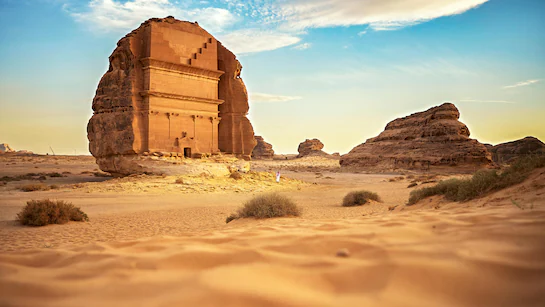
AlUla: An Open-Air Museum of Civilizations
A Landscape Shaped by Time
AlUla feels almost unreal. Towering sandstone formations, lush oases, and ancient tombs create a dramatic setting that seems carved by both nature and history. For thousands of years, AlUla was a crossroads of civilizations, linking the Arabian Peninsula with the wider ancient world.
The region is home to Hegra, Saudi Arabia’s first UNESCO World Heritage Site, featuring remarkably preserved Nabataean tombs carved directly into rock faces. Walking among them is a humbling experience, one that connects visitors to lives lived over two millennia ago.
Cultural Experiences Beyond Ruins
AlUla’s transformation goes far beyond archaeological preservation. The region is being developed as a holistic cultural destination where history, art, and nature coexist.
Visitors can attend open-air concerts set against dramatic cliffs, explore contemporary art installations inspired by the desert, or take guided heritage walks led by local storytellers. Each experience is designed to deepen understanding rather than simply impress.
Sustainable Luxury in the Desert
AlUla’s luxury resorts are redefining what high-end travel looks like in the Middle East. Built with sustainability in mind, many properties blend seamlessly into the landscape, using natural materials and low-impact designs.
Guests are encouraged to slow down, disconnect from noise, and reconnect with the environment. Stargazing, wellness retreats, and curated cultural programs replace the fast-paced luxury typical of urban destinations.
Beyond Diriyah and AlUla: Emerging Cultural Destinations
Asir: Mountain Culture and Cool Climates
In the southwest of Saudi Arabia, the Asir region offers a completely different experience. With misty mountains, green valleys, and cooler temperatures, Asir feels worlds away from the desert image many associate with the Kingdom.
Traditional villages feature colorful geometric patterns painted on stone houses, reflecting a unique regional identity. Cultural festivals celebrate local music, dance, and cuisine, while mountain trails invite nature lovers to explore Saudi Arabia’s lesser-known landscapes.
Jeddah’s Historic Al-Balad
Jeddah’s old town, Al-Balad, is another cornerstone of Saudi cultural tourism. With its coral-stone houses, wooden balconies, and narrow alleys, the district tells the story of a port city shaped by pilgrims, traders, and artists.
Recent restoration efforts have revived Al-Balad as a cultural hub, with art exhibitions, heritage hotels, and traditional markets breathing new life into historic buildings. It is a place where past and present coexist naturally.
Najran and the Southern Heritage
Near the Yemeni border, Najran offers a rich blend of architectural heritage and ancient history. Mudbrick forts, archaeological sites, and traditional crafts reflect centuries of cultural exchange.
This region highlights Saudi Arabia’s diversity, showing that there is no single Saudi identity, but many regional stories woven together.
Cultural Tourism With a Human Touch
What sets Saudi Arabia’s cultural tourism apart is its emphasis on people. Local communities are being trained as guides, hosts, and storytellers, ensuring that tourism benefits residents while preserving authenticity.
Travelers are not just observers; they are participants. Whether sharing coffee with a local family, learning traditional crafts, or listening to oral histories, visitors experience Saudi culture through genuine human connection.

Redefining the Global Image of Saudi Arabia
Saudi Arabia’s investment in cultural tourism is also about perception. By opening historic sites and celebrating heritage, the Kingdom is inviting the world to see a different side of the country.
This new narrative emphasizes creativity, preservation, and openness. It shows a nation confident enough to share its past while shaping its future. For many travelers, visiting these cultural hotspots challenges preconceived ideas and replaces them with understanding and appreciation.
The Future of Cultural Travel in the Kingdom
Saudi Arabia’s cultural tourism journey is still unfolding. New museums, heritage villages, mountain retreats, and cultural festivals continue to emerge across the country. Each project builds on the idea that culture is not static; it is lived, evolving, and deeply human.
As travelers increasingly seek experiences that offer meaning rather than spectacle, Saudi Arabia’s approach feels timely and thoughtful. By honoring its roots while embracing innovation, the Kingdom is positioning itself as one of the most compelling cultural destinations of the coming decade.
A Journey Worth Taking
Diriyah, AlUla, and the regions beyond offer more than beautiful landscapes or impressive architecture. They offer stories of resilience, creativity, and identity. They invite travelers to slow down, listen, and connect.
In opening its cultural heart to the world, Saudi Arabia is not just building tourist destinations. It is building bridges between past and present, between people and place, and between the Kingdom and the global traveler.
Do follow Gulf Magazine on Instagram.
Also Read – Unified GCC Visa: How One Visa Will Transform Gulf Travel

