


Saudi Arabia has reached a defining economic milestone. In the third quarter of 2025, the Kingdom’s unemployment rate declined to just 3.4 percent, marking one of the lowest levels in its modern history. This achievement reflects years of structural reforms, targeted labor policies, and a growing private sector that is steadily absorbing national talent.
Beyond the headline figure, the data tells a deeper story of transformation. Saudi citizens are finding more opportunities, women are participating in the workforce in record numbers, and young professionals are entering careers that align with the Kingdom’s long-term economic ambitions. The result is not just lower unemployment, but a more resilient, inclusive, and future-ready labor market.
A Historic Turning Point for the Saudi Labor Market
The drop to 3.4 percent unemployment is not a short-term fluctuation. It represents a sustained trend driven by Vision 2030 reforms that have reshaped how jobs are created, filled, and supported across the economy.
Over the past decade, Saudi Arabia moved away from reliance on public-sector employment as the primary job provider. Instead, the private sector has emerged as a powerful engine of growth, offering diverse roles in technology, tourism, manufacturing, logistics, healthcare, and creative industries. This shift has broadened career pathways for Saudi nationals and reduced structural unemployment.
For many families, the impact is tangible. Stable employment has improved household incomes, strengthened consumer confidence, and encouraged long-term financial planning. At a national level, it has enhanced economic stability and reduced dependency on oil-driven fiscal cycles.
Vision 2030 and the Strategy Behind Job Creation
At the heart of this success lies Vision 2030, Saudi Arabia’s ambitious national transformation strategy. Employment generation has been a core pillar of the plan, with a clear focus on aligning education, skills, and labor market needs.
Government initiatives emphasized vocational training, upskilling programs, and partnerships with private companies to ensure Saudi nationals are job-ready. Programs targeting digital skills, advanced manufacturing, and service-sector expertise have helped bridge gaps between academic qualifications and real-world demands.
Equally important has been regulatory reform. Simplified business licensing, incentives for startups, and improved access to financing have encouraged entrepreneurship. Small and medium-sized enterprises, in particular, have played a growing role in hiring local talent and driving employment growth across regions.
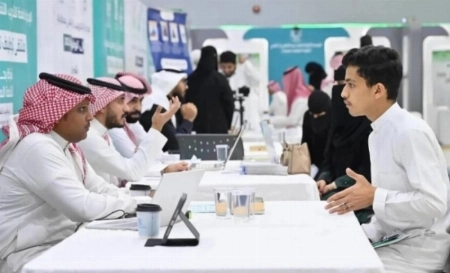
Saudization and Stronger Private Sector Participation
Nationalization policies, commonly known as Saudization, have evolved into more sophisticated and flexible frameworks. Rather than focusing only on quotas, recent approaches prioritize job quality, career progression, and long-term retention of Saudi employees.
Private companies are increasingly investing in training and development for national staff. Competitive wages, performance-based incentives, and clearer career paths have made private-sector roles more attractive than ever before. This cultural shift has been critical in reducing unemployment and ensuring that new jobs lead to sustainable careers.
The success of Saudization is evident in sectors once dominated by expatriate labor. Retail, hospitality, banking, and logistics now employ a growing number of Saudi professionals, many of whom are advancing into supervisory and leadership roles.
Rising Female Workforce Participation
One of the most transformative elements of Saudi Arabia’s labor market progress has been the surge in female employment. Social reforms, workplace flexibility, and supportive regulations have enabled more women to enter and remain in the workforce.
In Q3 2025, female participation continued its upward trajectory, contributing significantly to the decline in unemployment. Women are now actively engaged across sectors such as finance, education, healthcare, technology, and tourism. Remote work options, childcare support initiatives, and inclusive workplace policies have played a key role in this progress.
This shift has not only strengthened the economy but also reshaped societal norms. Families increasingly view women’s employment as a source of empowerment, stability, and long-term prosperity.
Youth Employment and Skills Alignment
Saudi Arabia’s young population represents one of its greatest assets. With a large proportion of citizens under the age of 35, youth employment has been a critical focus of labor market reforms.
Targeted internship programs, graduate training schemes, and public-private partnerships have eased the transition from education to employment. Universities and technical institutes are now more closely aligned with industry needs, ensuring graduates possess relevant and practical skills.
As a result, young Saudis are entering the workforce with greater confidence and adaptability. Many are finding opportunities in emerging sectors such as artificial intelligence, renewable energy, digital media, and smart infrastructure.

Sectoral Growth Driving Employment Gains
The decline in unemployment reflects strong job creation across multiple sectors. Tourism and entertainment, fueled by large-scale projects and global events, have generated thousands of new roles. Manufacturing and logistics have expanded as Saudi Arabia positions itself as a regional trade and production hub.
Healthcare and education continue to grow in response to population needs and quality-of-life initiatives. Meanwhile, the technology sector has emerged as a major employer, offering high-value jobs in software development, cybersecurity, data analytics, and fintech.
This diversification ensures that employment growth is balanced and resilient, reducing vulnerability to external economic shocks.
Wage Growth and Job Quality Improvements
Lower unemployment has been accompanied by improvements in job quality. Rising demand for skilled Saudi professionals has contributed to wage growth, particularly in specialized fields. Employers are increasingly focused on retention, offering benefits such as professional development, flexible work arrangements, and performance incentives.
Job stability and career advancement opportunities have improved worker satisfaction and productivity. This positive cycle reinforces economic growth, as higher incomes support consumption and investment across the economy.
Regional Development and Inclusive Growth
Employment gains are not limited to major urban centers. Regional development initiatives have created jobs in smaller cities and rural areas, supporting balanced economic growth.
Industrial zones, tourism destinations, and infrastructure projects outside major hubs have expanded local employment opportunities. This approach reduces regional disparities and allows more citizens to contribute to and benefit from national growth.
By spreading opportunity across the Kingdom, Saudi Arabia is building a more inclusive labor market that supports long-term social cohesion.
Economic Confidence and Global Perception
The achievement of a 3.4 percent unemployment rate sends a powerful signal to global investors and partners. It reflects policy consistency, effective governance, and a labor market capable of supporting large-scale economic transformation.
International companies increasingly view Saudi Arabia as a competitive destination for investment, supported by a skilled and motivated workforce. This confidence attracts further capital, technology, and expertise, creating a virtuous cycle of growth and employment.
Looking Ahead: Sustaining the Momentum
While the Q3 2025 figures are impressive, the focus now shifts to sustainability. Continued investment in education, skills development, and innovation will be essential to maintain low unemployment levels.
As automation and digitalization reshape industries, Saudi Arabia’s emphasis on lifelong learning and adaptability will be critical. Policies that encourage entrepreneurship, support women and youth, and strengthen private-sector competitiveness will help ensure long-term success.
The journey is ongoing, but the direction is clear. Saudi Arabia has moved decisively toward a more dynamic, inclusive, and opportunity-driven labor market.
A Human Story of Progress
Behind every percentage point lies a personal story. A graduate securing a first job, a mother returning to the workforce, an entrepreneur hiring local talent these are the real outcomes of the unemployment decline.
The 3.4 percent figure is more than an economic indicator. It represents renewed confidence, dignity through work, and a shared belief in the Kingdom’s future. As Saudi Arabia continues its transformation, employment remains one of its strongest foundations for prosperity and social progress.
Do follow Gulf Magazine on Instagram.
Also Read – Unforgettable Full-Day in Riyadh: Explore Stunning Heritage Villages & Traditions

