

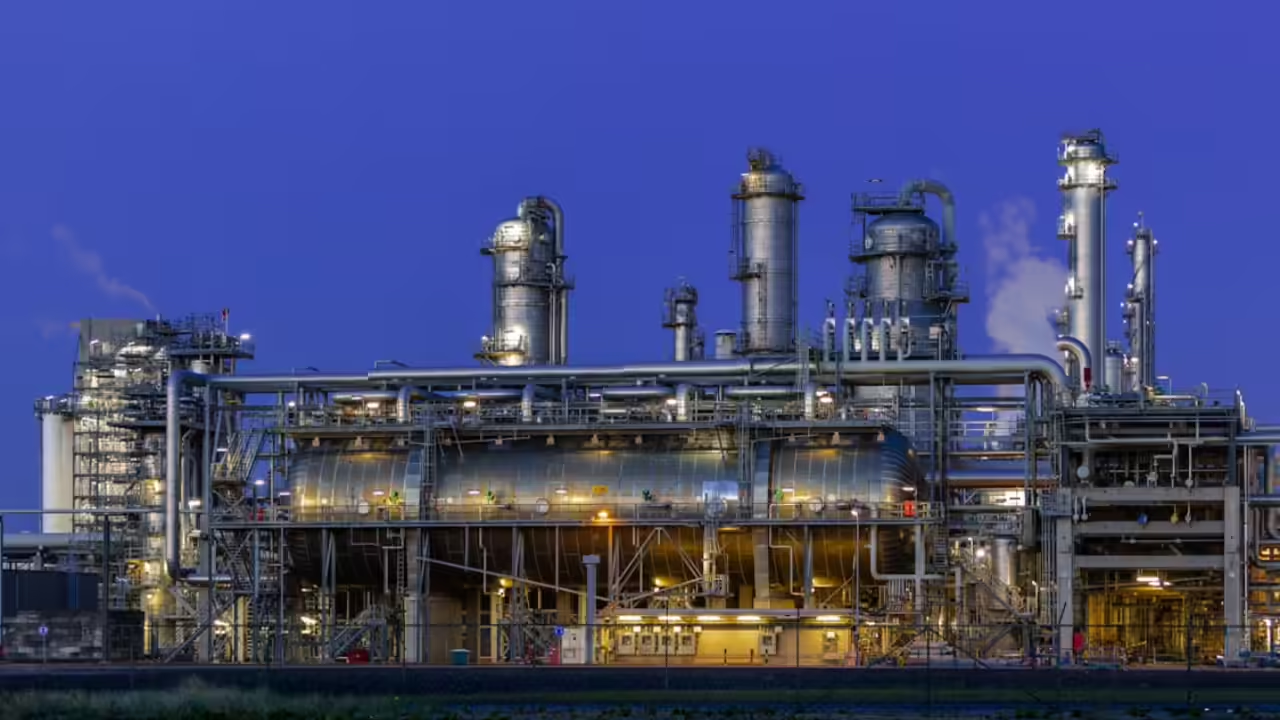
Walk into a modern Saudi manufacturing plant today and the hum is unmistakable machines synced with software, teams moving with purpose, supervisors swapping notes with engineers. This is not the industrial picture many people still imagine smoke stacks and solitary assembly lines but a dynamic, technology enabled ecosystem where people and machines collaborate. For workers, engineers, suppliers and families, the change is felt in daily rhythms a steady paycheck, new skills learned on the job, and the quiet confidence that comes from being part of something growing.
From policy to people the human side of momentum
Big strategies and national plans matter, but the manufacturing story in Saudi Arabia is ultimately about individuals whose lives have shifted. Consider a mid career welder who trained at a local technical institute and now programs a robotic welder or a young quality inspector whose smartphone app flags defects in real time, keeping products consistent and clients happy. These are ordinary people discovering that manufacturing is not just about repetition it is an avenue to learning, pride, and better futures.
Families feel it too. Steadier employment means children have access to better schooling and health care. Small service businesses such as cafes, repair shops, and transport providers see more customers. The trickle of economic confidence that comes from steady, well paid factory work shows up in community celebrations, in parents saving for college, and in the way neighborhoods look and feel more secure.
Rethinking what manufacturing means
Historically, manufacturing conjured images of heavy industry. Today, it encompasses precision electronics, food processing, pharmaceuticals, and advanced materials. The sector is increasingly knowledge driven. Data analytics inform production runs, automation reduces dangerous tasks, and local research teams design products tailored to regional markets. This evolution changes who is needed in factories not just operators, but data analysts, maintenance technicians, product designers, and managers who can bridge technical and commercial goals.
For the workforce, that means training and reskilling are front and center. Vocational programs and on the job learning replace the old assumption that factory work is low skill and stagnant. Workers describe the newfound dignity in crafting complex components, troubleshooting high tech equipment, and contributing to products that carry the Saudi name abroad.

Cities grow around industry and people grow with it
Manufacturing hubs create ripple effects across cities. New clusters attract suppliers, logistics companies, and service providers, turning single focus zones into lively economic corridors. Workers move closer to jobs, which changes housing demand and urban planning. Local governments find themselves balancing industrial growth with the need for parks, schools, and health centers.
But the transformation is not just physical it is cultural. Communities that once relied mainly on public sector employment are learning to value entrepreneurship and private sector careers. Mothers and fathers who might have seen manufacturing as an option for sons now encourage daughters to pursue technical diplomas. That shift in mindset is slow but profound it stretches possibilities for a whole generation.
Small businesses the unsung partners
Behind every successful factory are dozens or sometimes hundreds of small suppliers and service providers. Toolmakers, packaging firms, logistics startups, and software developers supply the parts, materials and expertise that keep production running. For many entrepreneurs, the rise in local manufacturing offers a chance to upgrade shifting from importing components to producing them locally, or investing in better equipment to meet rising quality standards.
These suppliers often start in a garage or a small workshop and, with a few large contracts, scale quickly. The result is a diverse manufacturing ecosystem where success stories multiply a family run foundry becomes a major supplier, a former mechanic starts a precision machining firm, a local bakery expands into regional distribution because demand from factories and staff cafeterias grows.
Technology as a human amplifier not a replacement
Automation and robotics are often framed as job takers. In reality, when thoughtfully integrated, technology amplifies human capability. Machines handle repetitive, dangerous, or physically taxing tasks, freeing people to focus on oversight, complex assembly, and quality control. Remote monitoring systems allow technicians to diagnose issues faster, reducing downtime and giving workers clearer signals for learning and troubleshooting.
This does not mean everyone moves seamlessly into higher skilled roles. Transition requires training, mentorship, and often a cultural shift in how companies view their employees not as interchangeable cogs but as partners in continuous improvement. Organizations that invest in on site academies, coaching and clear career pathways tend to retain staff longer and build more resilient operations.
Quality branding and the export opportunity
As factories lift their standards, the products born inside Saudi workshops increasingly carry a story of quality. Packaging improves, tolerances tighten, and design embraces both function and aesthetics. For businesses, that opens doors to new markets. Exporting goods whether processed foods that reflect local flavors, medical supplies, or industrial components becomes not just a revenue strategy but a symbol of capability.
This move toward higher value goods reshapes corporate ambitions. No longer is the goal solely to supply domestic demand. Companies aspire to compete regionally and globally, and that ambition alters hiring, investment in certifications, and relationships with overseas distributors. When a Saudi branded product reaches a foreign shelf and earns repeat customers, the pride radiates back home inspiring students, technicians and future entrepreneurs.
The role of education and skill ecosystems
Sustainable manufacturing momentum rests on talent pipelines. Colleges, technical institutes, and private trainers are aligning curricula with factory needs welding certifications, programming for industrial controls, mechatronics, supply chain analytics, and English for technical communication. Apprenticeship programs pair classroom learning with paid work, shortening the path from study to meaningful employment.
Some success stories come from companies partnering with schools to design syllabi that reflect real world problems. Students get exposure to live projects, and firms recruit from a pool already familiar with their systems. Over time, this reduces onboarding friction and invites innovation. Students contribute fresh ideas and companies retain motivated, adaptable employees.

Environmental responsibility and social impact
Modern manufacturing cannot ignore sustainability. Companies are investing in energy efficiency, water recycling and waste reduction practices not just because regulations demand it, but because long term viability depends on it. Energy intensive processes are being redesigned, packaging is rethought to reduce waste, and supply chains are audited for environmental and social practices.
These efforts have human dimensions healthier workplaces, safer materials handling, and community initiatives that offset industrial footprint. Workers take pride in being part of operations that treat the environment responsibly. Communities respond positively when factories invest in local infrastructure and take responsibility for ecological stewardship.
Challenges on the path forward
Momentum does not mean perfection. Challenges remain aligning education quickly enough with technological shifts, ensuring that remote communities benefit from growth, and balancing rapid industrialization with social and environmental protections. Some smaller firms struggle to access capital or to meet certification demands required for exports. There is also the critical need to make sure that economic gains are shared fairly so that communities near industrial zones are not left behind.
These obstacles are not insurmountable they require sustained attention. Policymakers, private companies and civil groups must coordinate not just to incentivize investment but to ensure training, infrastructure, and local enterprise development keep pace with ambition.
Stories of change individuals who embody the shift
Imagine Layla, who left a hospitality job to join a local food processing plant. With training, she now oversees a packaging line, mentors new hires and helps refine product recipes for export markets. Or Ali, an electronics technician who, after studying mechatronics at a community college, now troubleshoots automated lines and trains apprentices. Their stories are replicated across towns and cities people discovering new careers, finding dignity in work, and seeing clear paths for progression.
These human stories are the best measure of progress. Policies and investment create opportunity, but it is people who translate that into real change in households, neighborhoods and the national psyche.
What success will look like in ten years
If momentum continues, the next decade could see manufacturing become a core engine of diversified growth, supporting thousands of small businesses, offering wide career pathways and contributing significant export revenue. Cities will host smarter industrial clusters, educational institutions will produce graduates ready for advanced roles, and local brands will be recognized across the region for quality and innovation.
More importantly, success will be measured in human terms fewer families struggling financially, more young people excited about technical careers, and communities that welcome industry because it brings opportunity and inspiration.
A call to craft a human centered industrial future
Building manufacturing momentum is not only about machines and numbers it is about designing systems that elevate people. That means creating training systems that are accessible, designing workplaces that protect health and dignity, and shaping cultures that see employees as partners in growth. It also means listening to communities, ensuring environmental care, and enabling small businesses to scale.
The factories humming across Saudi Arabia today are more than buildings they are stages where lives are shaped, ambitions realized, and futures forged. The challenge and the opportunity is to keep that human story at the center of industrial progress so that momentum translates into prosperity that is felt in every home.
Conclusion momentum with a human heartbeat
Inside Saudi Arabia’s manufacturing surge there is machinery and math, but also laughter in break rooms, the quiet satisfaction of a job done well, and the steady beat of families planning for tomorrow. When technology, policy and human ambition come together, manufacturing becomes a force that transforms more than economic figures it transforms lives. That is the truest measure of momentum.
Do follow Gulf Magazine on Instagram.
Also Read – Jim Tracy’s Landmark MISA License Elevates SkyLink Technologies in Saudi Arabia

