

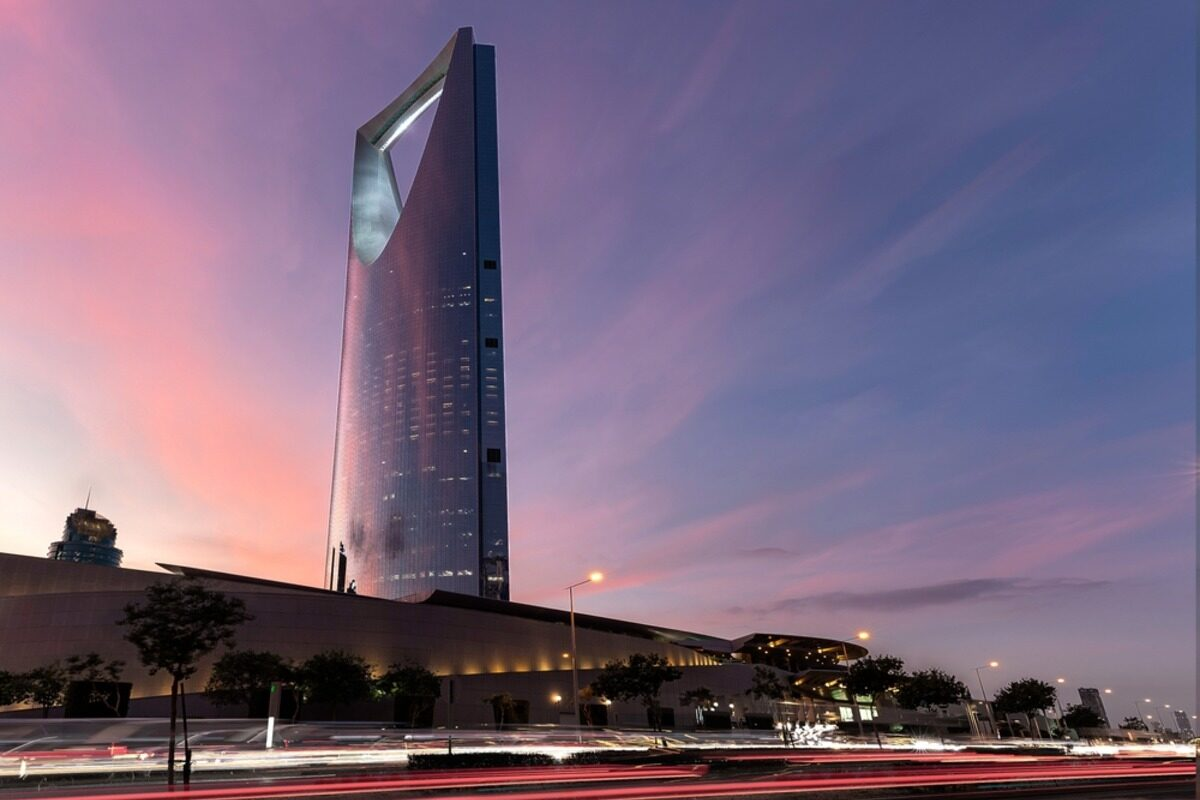
In November, Saudi Arabia’s non-oil private sector continued to expand strongly, with the headline Purchasing Managers’ Index (PMI) showing one of the healthiest readings in months. The Riyad Bank/S&P Global PMI registered a reading well above the 50.0 growth threshold, reflecting broad gains in output, employment and business confidence across services and manufacturing companies. This expansion signals that activity outside the oil sector is sustaining momentum as the kingdom advances its economic diversification under Vision 2030.
Output surges to its highest level in nearly a year
Companies reported a sharp increase in production during November, with the output subindex climbing to levels not seen in the past ten months. Many firms attributed the rise in output to strong domestic demand, a rebound in some service segments, and a steady flow of new projects and public investment. Several business owners and managers told surveyors they had stepped up operations to meet rising local consumption and finished more work that had been building up on their books.
Why new orders slowed even as output rose
Despite the strong expansion in activity and output, the PMI’s new orders component showed a slower rate of increase compared with the previous month. The new orders subindex eased from October’s elevated reading, indicating that while firms continued to win business, the pace of incoming demand moderated. Analysts suggest several reasons: a natural cooling after a very strong October, timing effects for large contracts, and selective slowing in certain sectors such as export-facing services. The slowdown in new orders is not a sign of immediate weakness, but it does point to a more measured pace of expansion going forward.
Exports and domestic demand mixed but positive signals
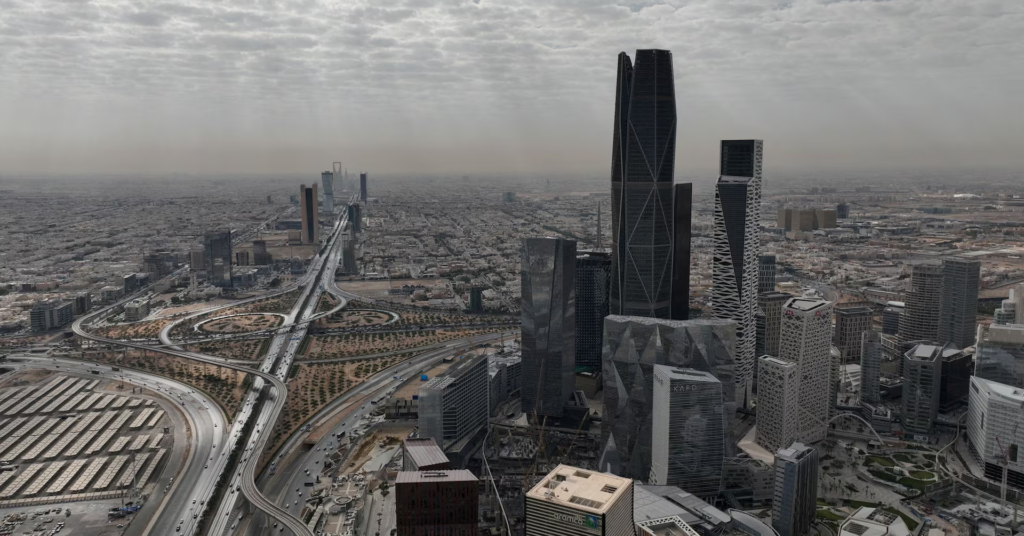
The PMI report showed export orders rising for the fourth straight month, although the increase was modest. Export improvements helped support overall growth, even if they were not the dominant driver. Meanwhile, domestic demand remained the key force behind the expansion, with many companies reporting healthy local sales. In short, the balance between home-market strength and gradually improving international demand has so far supported steady non-oil growth.
Employment edges up as firms respond to demand
Business leaders indicated they were hiring to keep pace with higher output, but employment growth was slightly slower than October’s near-record rate. Firms said they needed more staff to handle increased workloads and to clear backlogs of unfinished work a sign that growth had created real capacity pressure. The hiring trend reinforces the message that the non-oil expansion is translating into jobs, an important policy goal for the kingdom.
Backlogs and supply chains firms manage rising workloads
The PMI also pointed to a build-up in backlogs of work the longest stretch of accumulation since 2019, according to the survey. While rising backlogs can mean longer delivery times for customers, they also signal sustained demand and future work pipelines. Firms reported some supply-side pressures, but overall delivery times and supplier conditions remained manageable as businesses adapted to increased volumes.
Prices, input costs and business optimism
Input costs rose in several segments, and companies passed some of those costs on in the form of higher prices. Nevertheless, business sentiment stayed upbeat. Many firms cited ongoing public and private investment, new infrastructure projects, and the broader Vision 2030 reforms as reasons for positive expectations about the year ahead. This high level of optimism is supporting investment plans and hiring intentions across sectors.
What this means for Saudi’s economic transition
The November PMI reading reinforces that Saudi Arabia’s strategy to reduce reliance on oil by growing non-oil sectors is gaining traction. Strong readings for output and employment suggest genuine structural change rather than a short-lived cyclical spike. Continued strength in services, construction and non-oil manufacturing will be crucial to sustain long-term growth, broaden the tax base, and create jobs for the young Saudi population. However, policymakers will be watching the slowdown in new orders as an early indicator of demand momentum going forward.
Risks and things to watch
While the headline is positive, several risks remain that could temper growth. A sharper-than-expected drop in global demand, tighter external financing conditions, or abrupt changes in commodity markets could weigh on exports and investment. Domestically, labor market tightness and higher input costs could squeeze margins for small and medium firms. Analysts will closely monitor upcoming PMI releases, government spending plans, and private investment flows to see whether the current pace of expansion is sustained.
Policymakers and businesses how to respond
Given the mixed signals robust output but slower new order growth a pragmatic approach makes sense. Policymakers can maintain supportive public investment, ease regulatory bottlenecks, and target measures that bolster small firms’ access to finance. Businesses should focus on improving supply-chain resilience, investing in worker training to address skills shortages, and pursuing new export markets to diversify revenue streams. Such measures would help convert current momentum into a long-lasting structural shift.
A human story behind the numbers
Beyond percentages and indices, the PMI reflects real people and companies adapting to change. Small café owners scaling up to meet more customers, construction contractors juggling multiple projects, and tech startups winning fresh contracts these are the human faces of Saudi’s economic transformation. Their struggles, successes and decisions help explain the headline numbers and make the broader shift more tangible and inspiring. The kingdom’s Vision 2030 remains both a roadmap and a lived reality for many entrepreneurs.
Bottom line — momentum with caution
November’s PMI shows a non-oil sector that is healthy and expanding, but also settling into a slightly more moderate rhythm. Output and employment remain strong, backlogs are building, and firms are generally optimistic. The slowdown in new orders is a watchpoint rather than an alarm: it narrows room for complacency but does not negate the underlying positive trend. For policymakers, business leaders and investors, the message is clear opportunities abound, but steady hands are needed to turn current momentum into long-term, inclusive gains.
Do Follow Gulf Magazine on Instagram
Read More:- Iraq’s High-Level Visit Sparks Powerful Progress at WCC 2025

