


The Saudi Arabia Qatar bullet train project is being seen as one of the most ambitious transportation ideas in the modern Middle East. Covering a distance of around 785 kilometers in just two hours, the project promises to reshape how people move between the two nations. What once required long drives or short-haul flights could soon become a smooth, high-speed rail experience.
More than just a transport project, the bullet train reflects a larger shift in how the Gulf region is thinking about connectivity. As Saudi Arabia accelerates its Vision 2030 goals and Qatar continues expanding its global footprint after hosting major international events, both countries are looking for smarter, greener, and more efficient ways to link their economies and societies.
This proposed rail link is not just about speed. It is about redefining mobility, encouraging tourism, supporting business travel, and creating a shared future where borders feel closer than ever.
What the Saudi Arabia–Qatar Bullet Train Is All About
At its core, the project envisions a high-speed rail corridor connecting key cities in Saudi Arabia with Doha in Qatar. While exact station points may evolve, the concept revolves around linking major urban and economic hubs, likely starting from Riyadh or Dammam and passing through strategic points before entering Qatar.
The train is expected to run at speeds comparable to the world’s fastest rail systems, potentially exceeding 300 kilometers per hour. This means passengers could travel the entire 785-kilometer stretch in roughly two hours, including minimal stops.
The experience is expected to be closer to premium air travel than traditional trains. Spacious seating, digital ticketing, onboard Wi-Fi, dining services, and seamless border processing are all part of the long-term vision.
Why This Project Matters So Much
The significance of this bullet train goes far beyond convenience. It represents a new chapter in regional cooperation and economic integration.
For decades, the Gulf’s primary mode of long-distance travel has been aviation. While flights are fast, they come with airport congestion, security delays, and environmental concerns. A high-speed rail system offers a cleaner and more efficient alternative.
The project also sends a strong signal to investors and global partners. It shows that the region is serious about infrastructure, sustainability, and future-ready mobility.
In many ways, the Saudi Arabia–Qatar bullet train could become a symbol of the Gulf’s transformation from oil-based economies into diversified, interconnected societies.
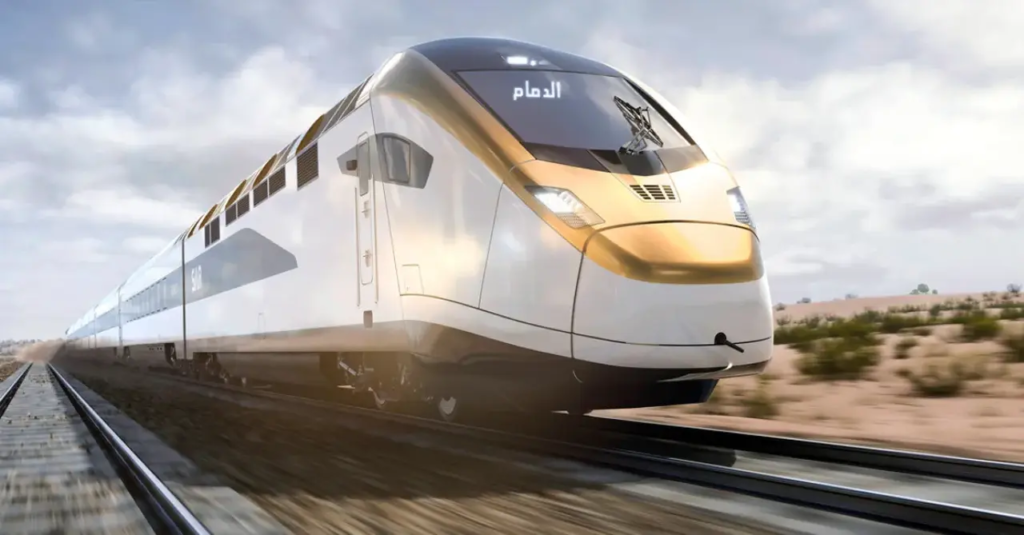
Travel Time: From Long Journeys to Just Two Hours
Currently, traveling between Saudi Arabia and Qatar typically involves either driving long distances or taking a short flight. Both options have their challenges.
Driving can take up to eight or nine hours depending on the starting point and border conditions. Flights are faster in the air but often end up taking three to four hours door-to-door when factoring in airport procedures.
The bullet train changes everything.
A two-hour rail journey means professionals could attend meetings in Doha and return to Saudi Arabia the same day. Families could plan weekend trips without the stress of long travel. Tourists could explore multiple Gulf destinations in a single itinerary.
This level of accessibility could fundamentally change how people think about distance in the region.
Economic Impact Across Borders
One of the strongest arguments for the project is its potential economic impact. High-speed rail systems around the world have consistently shown positive effects on regional development.
For Saudi Arabia, the bullet train aligns perfectly with Vision 2030, which aims to boost tourism, attract foreign investment, and modernize infrastructure. Improved connectivity with Qatar can open new trade corridors and business opportunities.
For Qatar, the rail link offers a chance to expand its tourism reach and integrate more deeply with neighboring markets. Visitors landing in Doha could easily extend their trips into Saudi Arabia, and vice versa.
The ripple effect could include growth in hospitality, retail, logistics, real estate, and digital services. Entire new economic zones could emerge around major train stations.
Tourism Gets a Massive Boost
Tourism is expected to be one of the biggest winners of the Saudi Arabia–Qatar bullet train.
Saudi Arabia is opening up its cultural and historical sites to international visitors, from heritage cities to futuristic mega-projects. Qatar, on the other hand, has positioned itself as a luxury and events destination.
With a high-speed rail connection, tourists could experience both worlds in a single journey. Imagine landing in Riyadh, exploring ancient sites, then hopping on a train to Doha for beaches, museums, and modern city life.
This kind of multi-country travel experience is common in Europe and East Asia, but still relatively new in the Gulf. The bullet train could make it the new normal.
A More Sustainable Way to Travel
Environmental sustainability is becoming a key factor in global infrastructure planning, and this project fits well into that narrative.
High-speed trains produce significantly lower carbon emissions compared to airplanes and long-distance cars. As the Gulf region works toward greener development models, rail transport offers a practical solution.
The project could also encourage a shift in public behavior, making people more comfortable choosing trains over flights for regional travel. Over time, this could reduce overall carbon footprints and support national climate goals.
In a region often associated with highways and air travel, this shift toward rail could be truly transformative.
Technology and Innovation at the Core
The Saudi Arabia–Qatar bullet train is expected to be built using cutting-edge rail technology. From advanced signaling systems to smart ticketing platforms, the entire network would rely on digital infrastructure.
Artificial intelligence could play a role in managing schedules, optimizing energy use, and improving passenger safety. Real-time tracking apps could allow travelers to plan their journeys with precision.
Biometric border checks and automated customs processes could further streamline the travel experience, making cross-border movement almost as simple as domestic travel.
This level of technological integration positions the project as more than just a train. It becomes a smart mobility ecosystem.
Social and Cultural Connectivity
Beyond economics and technology, the bullet train also carries deep social significance.
Saudi Arabia and Qatar share cultural roots, language, traditions, and family ties. Yet physical distance and travel logistics have often limited interaction.
A fast and affordable rail link could strengthen social bonds, making it easier for families to visit each other, students to attend regional universities, and communities to collaborate across borders.
Over time, this increased interaction could lead to a stronger sense of regional identity and shared future.
Challenges and Realistic Expectations
While the vision is exciting, large infrastructure projects always come with challenges.
Financing is one of the biggest factors. Building a 785-kilometer high-speed rail system requires massive investment, long-term planning, and coordination between governments.
Engineering challenges also exist, especially in desert environments where extreme heat, sand, and terrain conditions can affect construction and maintenance.
There are also regulatory and logistical issues, such as border agreements, security frameworks, and operational standards.
However, both Saudi Arabia and Qatar have proven experience in delivering mega-projects, from smart cities to world-class airports and stadiums. With the right planning, these challenges are far from impossible.
How This Fits into the Gulf’s Bigger Rail Network
The Saudi Arabia–Qatar bullet train is not an isolated idea. It fits into a much larger vision of a connected Gulf rail network.
Several Gulf countries have already discussed or initiated plans for regional rail systems linking the UAE, Oman, Bahrain, Kuwait, and Saudi Arabia.
If fully realized, travelers could one day move across the entire Gulf region by high-speed rail, similar to Europe’s interconnected train networks.
In that context, the Saudi-Qatar link becomes a key piece of a much larger puzzle, positioning the Gulf as a global leader in modern transport infrastructure.
What Passengers Can Expect from the Experience
For passengers, the bullet train is expected to offer a premium yet practical experience.
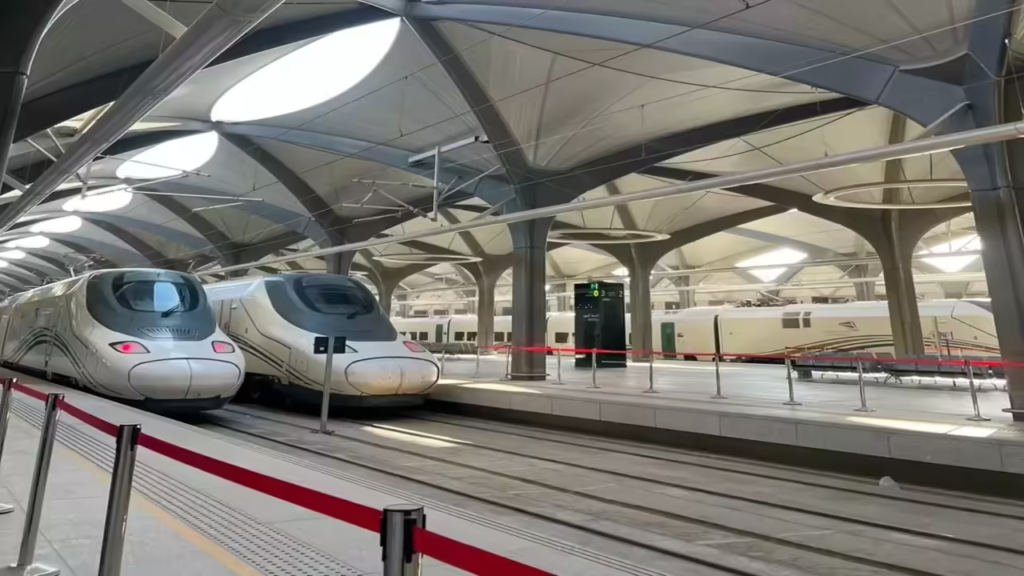
Stations are likely to be designed as modern transport hubs, featuring shopping areas, lounges, cafes, and business facilities. The journey itself would be smooth, quiet, and fast.
Seating options could range from standard economy to business-class style compartments. Onboard services may include dining, entertainment systems, and work-friendly spaces.
The goal is not just to move people quickly, but to make the journey itself enjoyable and productive.
A Game Changer for Business Travel
Business professionals stand to benefit enormously from the project.
Executives could attend meetings, conferences, and events across borders without the need for overnight stays. Companies could operate more fluidly across Saudi and Qatari markets.
This level of accessibility could encourage more joint ventures, regional headquarters, and cross-border partnerships.
Over time, the bullet train could become the preferred mode of travel for professionals who value speed, comfort, and efficiency.
The Psychological Shift: Distance No Longer Feels Real
One of the most powerful impacts of high-speed rail is psychological rather than physical.
When travel becomes fast and easy, people start perceiving distances differently. Cities that once felt far away suddenly feel like neighboring districts.
The Saudi Arabia–Qatar bullet train could make Doha feel just a short commute away from Saudi cities. This shift in perception can influence everything from lifestyle choices to business strategies.
In essence, the train does not just shrink travel time. It reshapes how people think about space and opportunity.
Looking Ahead: The Future of Gulf Mobility
The bullet train project reflects a broader ambition in the Gulf: to become a global benchmark for smart infrastructure and quality of life.
As cities grow, populations increase, and economies diversify, efficient mobility becomes essential. High-speed rail offers a long-term solution that balances speed, sustainability, and social impact.
If successfully implemented, the Saudi Arabia–Qatar bullet train could inspire similar projects across the region, setting off a new era of rail-based development.
A Journey That Represents More Than Travel
Ultimately, this project is about more than just moving from one place to another.
It represents trust between nations, belief in shared growth, and confidence in a future driven by innovation rather than limitations.
The idea of covering 785 kilometers in just two hours once sounded like science fiction in the desert. Today, it feels increasingly realistic.
When the first train finally departs, it will not just carry passengers. It will carry the hopes of a region ready to move faster, closer, and smarter than ever before.
Do follow Gulf Magazine on Instagram.
Also Read – Gulf IPO Market: UAE and Saudi Arabia Dominate

