

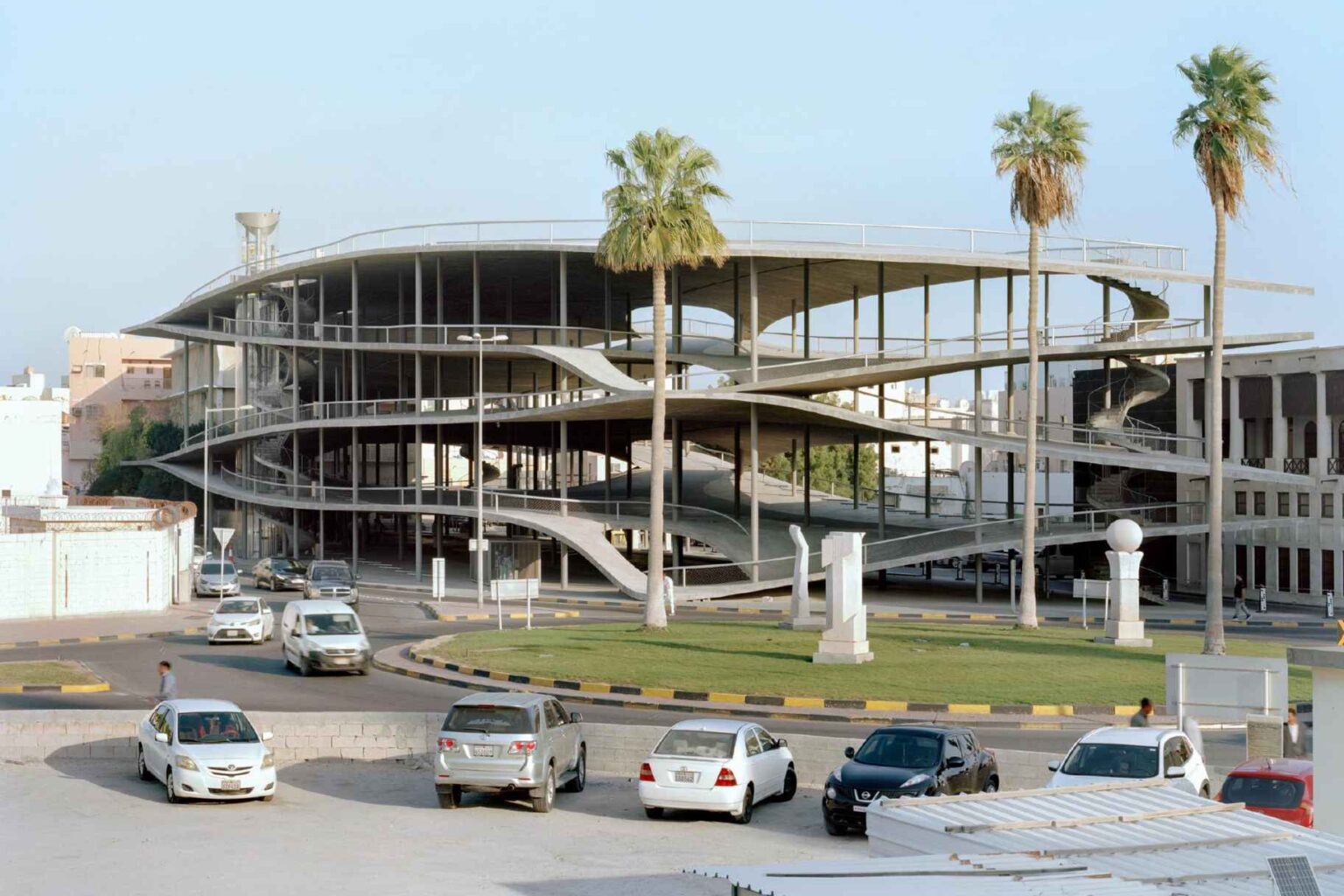
Christian Kerez the vibrant and historic city of Muharraq, Bahrain, something unexpected has quietly taken shape—car parks that look more like contemporary sculptures than utilitarian buildings. Designed by Swiss architect Christian Kerez, these four newly built parking structures are not just about providing a space for cars. They’re bold, concrete statements—an ambitious blend of art, architecture, and civic function that redefines how we experience everyday infrastructure.
Elevating the Ordinary
We rarely stop to admire car parks. Often tucked behind buildings or disguised in dull concrete shells, they exist out of necessity, not inspiration. But for Kerez, a long-celebrated visionary in architectural circles, that logic presented the perfect challenge: Could the mundane be transformed into something extraordinary?
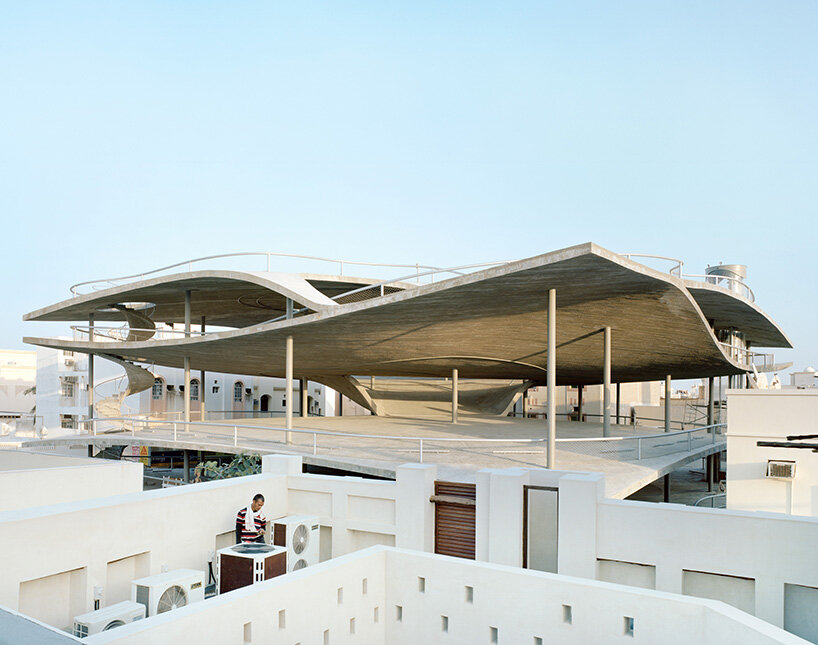
With that question, Kerez set out to design four parking structures as part of Bahrain’s Pearling Path initiative—an urban revitalization project focused on preserving and reinterpreting the historic pearling trade route. These buildings are not just parking lots; they’re architectural gestures that push against what’s expected. Through sculpted concrete slabs and gravity-defying geometry, Kerez has turned functionality into form, and the result is both surprising and spectacular.
Geometry in Motion
Rather than using traditional ramps that zigzag or spiral cars through levels, each of the four buildings relies on floors that slope and curve on their own. The slabs themselves become ramps, bending slightly, almost imperceptibly, to guide vehicles across levels. From one level to another, the concrete surfaces twist gently, creating a continuous spatial flow.
Each floor is different—some curve upward like waves; others bend inward, dipping gently before rising again. It’s a dynamic experience, not just for cars but also for pedestrians. People walking through the structures experience shifting perspectives, gentle inclines, and unexpected views. The sense of movement is embedded in the architecture itself, and that subtle motion gives life to something normally rigid and mechanical.
Engineered for Elegance
What makes these forms even more remarkable is the fact that they’re constructed using simple, industrial methods. Kerez and his team mapped out every curve and transition using over 75,000 individually scripted sections. These were then scaled up and printed to serve as templates for the formwork, allowing workers to mold each floor precisely.
Despite their complex appearance, the buildings are composed only of slabs and slender columns—there are no walls, no beams, no decorative extras. Each prefabricated column is reinforced with thin steel plates bent at the top, providing structural strength while maintaining a minimalist aesthetic. The columns are thin—just 25 to 30 centimeters—but can support spans of up to 10 meters. It’s an elegant balance of lightness and strength, function and beauty.
The approach is resourceful, too. Kerez avoided bespoke materials or high-tech solutions. Instead, the buildings were constructed using straightforward tools and common building materials. It’s proof that creativity in architecture doesn’t need to come at the cost of practicality.
Blending with Bahrain’s Urban Landscape
The car parks are carefully sited across different plots in the city of Muharraq, and each one responds to its surroundings in a unique way. Plot D, the smallest of the four, sits at a busy intersection and is the most visually sculptural of the group. It acts almost like a public art installation, turning heads and drawing visitors.
Plot B is more subdued, with a layout that integrates harmoniously into its low-rise neighborhood. Its design is modest in appearance but still holds the same curved, flowing surfaces that define the series.
These buildings do more than serve drivers—they offer space for gathering, for walking, for pausing. Locals have already begun to use the car parks in unexpected ways: for casual conversations, for small markets, and even for moments of prayer. In that way, the architecture serves not just vehicles, but people.
Where Heritage Meets Innovation
The car parks are part of the larger Pearling Path initiative, which aims to preserve and revitalize key cultural sites along the ancient pearling route in Bahrain. Recognized by UNESCO as a World Heritage site, the Pearling Path includes homes, marketplaces, and historic piers. Kerez’s contributions bring a contemporary sensibility to this deeply historical context.
While the car parks are clearly modern—sleek, concrete, almost futuristic—they don’t overpower the old city. Instead, they echo the low-rise scale of surrounding buildings and reflect the modular simplicity of traditional Gulf architecture. This balance between old and new, heritage and innovation, is what makes the project so compelling.
Reimagining Infrastructure
Kerez’s vision reminds us that public architecture doesn’t have to be boring. In fact, it shouldn’t be. The spaces we move through every day—car parks, walkways, transit stops—can be designed to uplift, to surprise, to bring beauty into the routine. These new structures in Muharraq do just that. They offer a new model for civic infrastructure: one that celebrates simplicity, embraces creativity, and respects context.
The “Four Car Parks” are not about extravagance or spectacle. They’re about seeing potential where others might not. They take the ordinary and, through imagination and precision, make it extraordinary. And in doing so, they challenge other cities, other architects, and all of us to rethink what everyday spaces can be.
As the dust settles and the last forms are removed, what remains is a quiet revolution in concrete—a sculpted rise from expectation to inspiration.

