


Water scarcity has long shaped economic planning across the Middle East, and Oman is no exception. With limited freshwater resources and rising demand from population growth, industry, and agriculture, the country has traditionally relied on energy-intensive desalination plants powered by fossil fuels. The launch of Oman’s second solar-powered desalination plant marks a meaningful shift away from this model and signals a broader transformation in how water infrastructure can be built, financed, and scaled sustainably.
This development is more than a technical upgrade. It reflects a strategic alignment between renewable energy, water security, and long-term economic resilience. For businesses and investors, it opens a window into a new class of infrastructure projects where sustainability and profitability are no longer competing goals but complementary ones.
Why Solar-Powered Desalination Matters Now
Rising Water Demand Meets Climate Reality
Oman’s water demand continues to rise due to urban expansion, tourism, industrial growth, and agricultural needs. At the same time, climate change is increasing temperatures and evaporation rates while placing pressure on groundwater reserves. Traditional desalination methods, while effective, consume large amounts of energy and contribute to carbon emissions.
Solar-powered desalination directly addresses this challenge by decoupling water production from fossil fuel dependency. By using abundant solar resources, Oman can produce potable water with lower operating costs over time and a significantly reduced environmental footprint.
Aligning With National Sustainability Goals
The second solar-powered desalination plant fits squarely within Oman’s long-term vision for economic diversification and environmental stewardship. The country has been actively investing in renewable energy to reduce reliance on oil revenues and build resilient infrastructure. Water, as a critical national resource, is a natural place to integrate clean energy solutions.
This alignment sends a strong signal to the private sector that sustainability-driven projects are not pilot experiments but core components of national development strategy.

How the Second Plant Builds on the First
From Proof of Concept to Scalable Model
The first solar-powered desalination plant in Oman served as a proof of concept, demonstrating that renewable-powered water treatment is technically viable in the country’s climate conditions. The second plant represents a move from experimentation to replication and scale.
With lessons learned from initial deployment, the newer facility benefits from improved system efficiency, better integration with existing water networks, and clearer frameworks for public-private collaboration. This evolution reduces risk and increases confidence for future investors.
Technology Improvements and Operational Efficiency
Advances in solar photovoltaic efficiency, energy storage, and desalination membranes have made the second plant more cost-effective than earlier iterations. Improved operational data also enables predictive maintenance and optimized water output, further enhancing economic performance.
For technology providers and engineering firms, this demonstrates a growing market for innovation-driven upgrades across Oman’s water infrastructure.
Sustainable Business Opportunities Emerging From the Project
Renewable Energy and Engineering Services
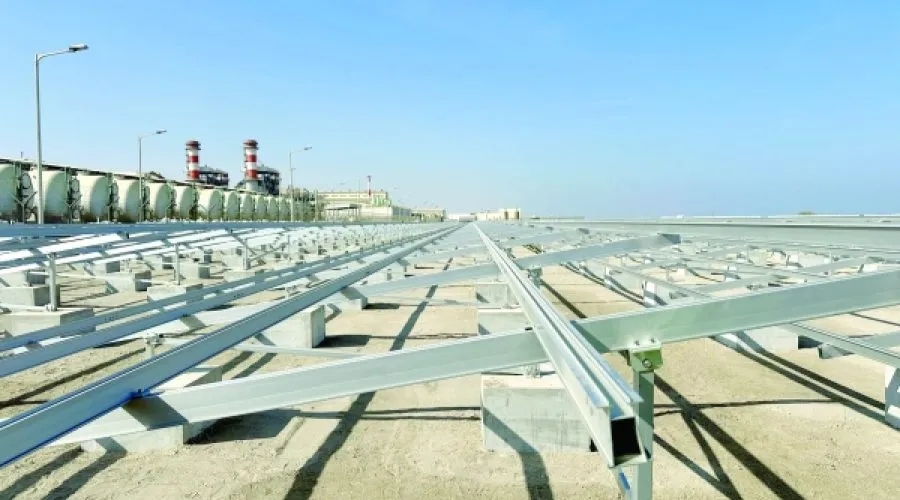
The expansion of solar desalination creates direct demand for renewable energy developers, EPC contractors, and system integrators. Companies specializing in solar arrays, energy management software, and hybrid power systems can find long-term opportunities in similar projects planned across the region.
Beyond construction, ongoing operations and maintenance contracts offer stable revenue streams and long-term engagement.
Water Technology and Innovation Startups
Solar-powered desalination plants rely on advanced filtration systems, smart sensors, and data-driven optimization tools. This opens the door for startups and technology firms offering solutions in membrane efficiency, brine management, water quality monitoring, and AI-based process control.
Oman’s growing openness to innovation-led infrastructure makes it an attractive testing ground for new water technologies that can later be exported to other arid regions.
Industrial and Commercial Water Supply
Reliable, sustainably produced water benefits industrial zones, tourism developments, and commercial real estate projects. Businesses that depend on high water quality, such as food processing, hospitality, and manufacturing, gain more predictable supply and reduced exposure to energy price volatility.
This stability can encourage new industrial investments, particularly in areas previously constrained by water availability.
Investment Implications for Local and International Players
Reduced Long-Term Risk Profile
Solar-powered desalination plants typically have higher upfront capital costs but lower long-term operating expenses due to minimal fuel requirements. Over time, this creates more predictable cash flows and insulation from energy market fluctuations.
For institutional investors, infrastructure funds, and sovereign partners, this improved risk profile makes water projects more attractive as long-term assets.
Public-Private Partnership Potential
Oman’s approach to developing its second solar desalination plant highlights growing openness to public-private partnership models. These structures allow governments to leverage private capital and expertise while offering investors stable returns backed by long-term water purchase agreements.
Such frameworks reduce uncertainty and create scalable templates for future water and energy infrastructure investments.
Growing Appeal to ESG-Focused Capital
Environmental, social, and governance considerations increasingly shape investment decisions worldwide. Solar-powered desalination aligns strongly with ESG criteria by addressing water security, reducing emissions, and supporting community resilience.
As a result, Oman’s water infrastructure projects are well-positioned to attract green financing, sustainability-linked loans, and impact investment funds seeking measurable environmental benefits alongside financial returns.
Broader Economic and Social Impact
Job Creation and Skills Development
The construction and operation of advanced desalination facilities generate employment across engineering, project management, technical maintenance, and data analytics. Over time, this contributes to a more skilled local workforce capable of supporting complex infrastructure projects.
Knowledge transfer from international partners to local professionals further strengthens Oman’s domestic capabilities.
Strengthening Water Security for Communities
Reliable access to clean water underpins public health, social stability, and economic productivity. By diversifying water sources and reducing dependence on fossil fuels, solar desalination enhances national water security even during periods of energy market disruption.
This stability benefits households, businesses, and public services alike.
Encouraging Regional Leadership
By successfully deploying multiple solar-powered desalination plants, Oman positions itself as a regional leader in sustainable water management. This leadership can translate into consulting opportunities, cross-border partnerships, and influence in shaping regional water and energy policies.
Challenges That Still Require Attention
Managing Upfront Capital Costs
Despite long-term benefits, solar desalination requires significant initial investment. Ensuring access to competitive financing and clear regulatory frameworks will be essential to accelerate wider adoption.
Innovative financing mechanisms, including blended finance and green bonds, can help bridge this gap.
Environmental Considerations Beyond Energy
While solar power reduces emissions, desalination still produces brine that must be carefully managed to protect marine ecosystems. Continued innovation in brine disposal and reuse will be critical to ensuring truly sustainable operations.
Addressing these challenges proactively strengthens the overall credibility of solar desalination as a long-term solution.
What This Means for the Future of Water Infrastructure in Oman
From Isolated Projects to Integrated Systems
The second solar-powered desalination plant represents a step toward integrated water and energy systems where renewables, storage, and smart management work together seamlessly. Over time, this approach can extend to wastewater treatment, water recycling, and decentralized supply models.
Such integration creates a more flexible and resilient national water network.
A Blueprint for Sustainable Growth
Oman’s experience demonstrates that sustainability-driven infrastructure can deliver tangible economic and social value. For policymakers, businesses, and investors, the lesson is clear: clean technology is not a cost burden but a strategic asset.
As water stress intensifies globally, the ability to produce clean water sustainably will become a defining competitive advantage.
Conclusion: A Quiet Revolution With Powerful Implications
Oman’s second solar-powered desalination plant may not dominate global headlines, but its significance is profound. It reflects a mature understanding that water security, clean energy, and economic growth are deeply interconnected.
For businesses, it opens new markets in renewable energy, water technology, and infrastructure services. For investors, it offers access to resilient, future-ready assets aligned with global sustainability trends. And for Oman, it strengthens the foundation for long-term prosperity in an increasingly resource-constrained world.
This project is not just about producing water. It is about redefining how essential infrastructure is built, financed, and sustained for generations to come.
Do follow Gulf Magazine on Instagram.
Also Read – Belarus Proposes Tourism Cluster in Oman to Boost Travel and Investment

