

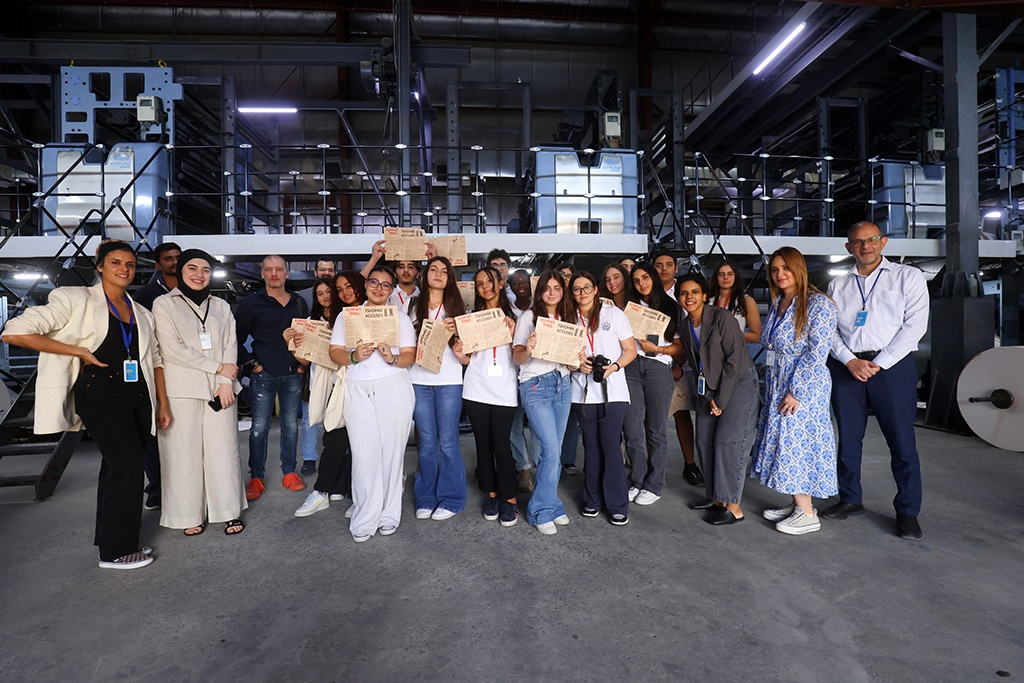
KUWAIT On a bright Tuesday morning, a group of enthusiastic students from Lycée Français de Koweït (LFK) stepped into the bustling offices of Kuwait Times and Kuwait News, their eyes full of curiosity eager to experience what it’s like behind the headlines.
It was more than just a school trip. For many of them, it was the first time they would see live how news is born: from raw information and ideas, to printed pages and online posts.
From Classrooms to Newsrooms: A Journey Begins
The visit was organized by Kuwait Times, which welcomed the students with warm hospitality. Public Relations and CSR Manager took them on a guided tour across multiple departments from the editorial floor to social media, from archives to production units.
In the editorial section, students got to meet reporters and editors who explained how each news story starts: with research, interviews, fact‑checking, and writing. They observed how raw data is transformed into concise stories — often under tight deadlines.
Then, the tour moved to the social media and digital content teams. Here, students learned how traditional print‑media adapt to a fast‑paced digital world creating posts, short videos, and multimedia content that reach readers across platforms.
Peeking Into the Past: Archives and History

One of the most memorable parts of the visit was the tour of the newspaper’s archive room. Students saw some of the earliest print editions a journey through decades of history. It offered them a tangible sense of how much journalism has changed over the years, how reporting standards evolved, and how media has chronicled the transformation of society.
Looking through old editions helped students understand the power of journalism: capturing a moment in time, preserving memory, shaping public discourse. Many of them stood quietly, leafing through dusty pages — perhaps imagining themselves contributing to future headlines.
Printing Press & Production: Where News Comes Alive
After exploring editorial and archives, the students were walked through the printing press — the heart of a traditional newspaper. They watched printing machines in action, producing piles of freshly printed newspapers, ready to be distributed the next morning.
For many, this was perhaps the most tangible part of the experience. It made them realize — each newspaper, each front page they read, is the result of hours of work by many individuals behind the scenes. It gave them a sense of respect for the often underappreciated labor of print journalism.
Addressing Real Issues: Social Media, Anxiety, and Youth Voices
The visit wasn’t just about machines and print. During their time at the Kuwait Times’ studio, some students from LFK — particularly those in the school’s press club — took part in an interactive session facilitated by the media house’s content creators. They picked a topic close to their age group: anxiety and mental health.
Students shared personal stories about how social media, peer pressure, and constant comparison affect mental well‑being. Some spoke about panic attacks, stress around academics, or the pressure to “fit in”. This frank conversation inside a real media studio opened their eyes to how journalism can give voice to youth concerns. It also showed them that media is not just about reporting events it’s about empathy, awareness, social responsibility.
Such sessions left many students thoughtful. For some, this may mark the beginning of a lifelong interest in media ethics, social advocacy, or mental‑health awareness — all informed by real experience and exposure.
Why This Experience Matters: Beyond a School Trip
For students of Lycée Français de Koweït a school that embraces multicultural identities and offers French‑style education to over 40 nationalities. the visit to Kuwait Times offered something priceless: a bridge between academics and real world.
Up until now, many of them studied theory: languages, sciences, social studies. But seeing a live newsroom in action — with journalists typing stories, editors debating headlines, printers humming — gave them a deeper appreciation of what goes on beyond classroom walls.
They realised that journalism is not only about writing and reporting — it’s also about responsibility, ethics, deadlines, design, technology, and even social impact. It’s a profession that demands curiosity, empathy, discipline and integrity.
For some, it might just spark an interest in pursuing journalism, media studies or communications. For others, it could inspire activism — raising awareness on issues like mental health, social inequality or youth challenges.
Shaping Future Citizens: The Role of Schools and Media
Visits like this highlight an important role of education beyond academics. Through such exposure, students learn civic awareness: how media shapes public opinion, influences society, and preserves history. They see first‑hand that with power (media influence) comes responsibility — to report truthfully, ethically, and empathetically.
For a school like Lycée Français de Koweït which prides itself on multilingual, multicultural education — such initiatives align perfectly. The students are being prepared not just for higher studies, but for global citizenship: to think critically, respect diversity, and engage with real-world issues.
Meanwhile, for media houses like Kuwait Times / Kuwait News opening their doors to young students builds trust, transparency, and also helps nurture the next generation of informed citizens, or even future journalists.
What Students Say — Real Voices, Real Reactions

Though this was a structured media tour, many students expressed surprise and excitement. Some admitted they had never considered how much work goes behind a newspaper: from story‑boarding to printing to distributing. Others were moved by the archive section — witnessing how newspapers of past decades looked, and how much the world has changed.
One student reportedly said (paraphrasing): “I always thought news just appears on my phone. But now I understand it’s hundreds of people working together to tell stories.”
Another shared during the mental‑health discussion: Seeing adults listen and take our worries seriously it made me feel that our voices matter.”
This emotional connect bridging youth concerns with real-world media could be the spark for many to explore communications, psychology, design, or social work.
Looking Ahead: More Than Just a Visit
For the students of Lycée Français de Koweït, the Kuwait Times visit may become more than a memory. It might shape their choices — in studies, in careers, in how they see media and society.
They now understand that journalism is not only about reporting wars, politics or business it’s about everyday stories, human lives, social change. With the multimedia age evolving rapidly, they also saw how journalism adapts: using social media, video, archives, digital content to reach broader, younger audiences.
The experience could even influence how they think about their own roles in society as consumers of media, as storytellers, as advocates for truth and change.
One can imagine future LFK alumni working as journalists, media analysts, content creators, social activists — armed with firsthand knowledge, empathy, and an international outlook.
Final Thoughts: Inspiration in Action
The visit of Lycée Français de Koweït students to Kuwait Times & Kuwait News was more than a field trip. It was an eye‑opening journey from classrooms to newsrooms; from textbooks to real stories; from passive reading to active understanding.
In a world where media shapes opinions, sparks debates, and influences actions, it’s important for the next generation to see — up close — how responsible journalism works. For these students, the experience may ignite a lifelong respect for truth, social responsibility and storytelling.
And to the rest of us it’s a reminder: every news article, every printed page, every digital post is the result of many people’s hard work, creativity, and commitment.
Do Follow Gulf Magazine on Instagram
Read More:- Late Afsha Penalty Denies Kuwait Famous Victory in Doha 2025

