

In a major positive development for the Middle East, Saudi Arabia and Qatar have officially agreed to settle Syria’s outstanding World Bank Debt of around $15 million owed to the World Bank. This important financial move is being widely seen as a strong signal of Syria’s slow return to the global financial community after years of isolation caused by civil war and political instability.
The $15 million payment will help clear Syria’s arrears with the World Bank, unblocking future financial aid and support from international organizations. With the arrears now paid, Syria can once again access international funding and resources that are vital for rebuilding its shattered economy, infrastructure, and social systems.
This financial step is especially significant because it marks the first major instance of Saudi Arabia extending monetary aid to Syria since the conflict erupted more than a decade ago. During those years, Syria faced international sanctions, political isolation, and widespread destruction of its cities, industries, and public services.
A Turning Point After Years of Conflict
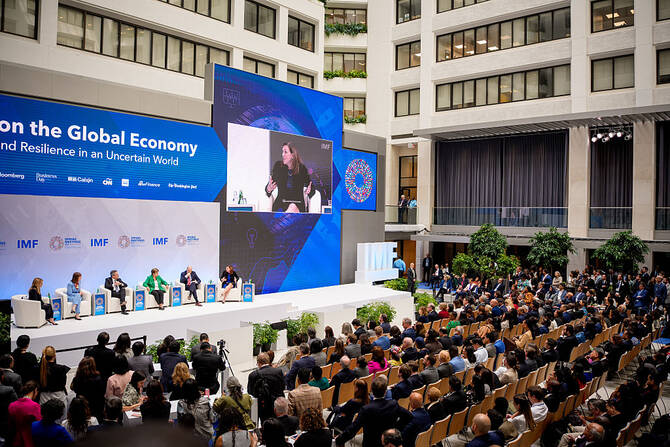
The settlement of Syria’s debt comes at a time when the war-torn nation is seeking to rebuild its economy and reconnect with the world. Syria’s presence at the recent International Monetary Fund (IMF) and World Bank Spring Meetings in Washington DC — the first time in over 20 years — was an important symbol of this change.
For many years, Syria was cut off from major international financial institutions due to the brutal civil war and allegations of human rights abuses under the former government. But with new leadership now in place and a shift in political dynamics, especially following the departure of Bashar al-Assad in December 2024, there are cautious steps toward normalcy.
The Saudi Finance Minister, Mohammed Al-Jadaan, confirmed that Saudi Arabia and Qatar would together cover Syria’s unpaid debt to the World Bank. Al-Jadaan noted that this financial support is necessary to help countries recovering from conflict but emphasized the need for careful management, given ongoing international sanctions that limit some types of economic cooperation with Syria.
Why This Move Matters
Paying off Syria’s arrears is more than just a financial transaction. It opens the door for Syria to resume normal relations with key institutions like the World Bank and IMF. Without clearing this debt, Syria would have remained locked out of critical funding channels needed for development projects, humanitarian assistance, and rebuilding efforts.
International financial institutions often require countries to clear past dues before allowing new aid programs or loans. By paying the $15 million debt, Saudi Arabia and Qatar are helping Syria move past an important hurdle.
Moreover, this move signals a broader shift in Middle Eastern geopolitics. Gulf countries like Saudi Arabia and Qatar are increasingly taking leadership roles in promoting regional stability. By helping Syria, they are demonstrating a commitment to rebuilding the region after years of conflict, migration crises, and economic disruption.
The Challenges Ahead for Syria
Despite this positive news, Syria faces a long and difficult road ahead. Estimates suggest that rebuilding Syria could cost up to $400 billion. More than half the country’s infrastructure has been destroyed or severely damaged by years of bombing and fighting.
Electricity shortages, water crises, collapsed healthcare services, and destroyed schools are among the many urgent challenges Syria must address. In addition, millions of Syrians have been displaced internally or are living as refugees abroad, many still unable to return home safely.
While the repayment of the World Bank debt opens the door for future aid, attracting large-scale investment will still be difficult due to lingering sanctions, political uncertainty, and the sheer scale of destruction.
However, some early signs of change are visible. Qatar has already started supplying natural gas to Syria to help with chronic electricity outages. Regional and international organizations are also exploring ways to support Syria’s recovery without violating sanctions, such as funding humanitarian projects directly.
The United Nations Development Programme (UNDP) has announced a three-year plan to invest approximately $1.3 billion into rebuilding Syria. The focus areas include restoring critical infrastructure, supporting digital start-ups, strengthening social safety nets, and promoting the use of artificial intelligence and technology in rebuilding efforts.
International Sanctions: A Complicated Web
One major obstacle for Syria’s recovery is the network of sanctions imposed primarily by Western countries. The United States, European Union, and the United Kingdom have all placed tough sanctions on Syria, aimed at preventing financial support to certain sectors of the Syrian government.
However, in recent months, some of these restrictions have been relaxed. The U.S. Treasury Department, for example, has temporarily allowed some transactions related to energy in Syria. Similarly, the European Union and Britain have either lifted or suspended specific sanctions, particularly in the energy and transport sectors.
These developments suggest there may be room for more international aid and investment in Syria in the coming months, although progress will likely be slow and cautious.
A New Chapter for Syria and the Middle East?
For Syria, the payment of its World Bank debt with help from Saudi Arabia and Qatar marks a hopeful beginning. It shows that despite years of war, destruction, and isolation, there is still a path toward reintegration into the global system.
It also highlights a growing trend in the Middle East where regional powers are taking greater responsibility for their neighbors’ recovery and stability, rather than relying solely on Western support.
While enormous challenges remain, and rebuilding Syria will take years if not decades, this financial gesture offers a spark of hope for a nation that has suffered so much. With careful management, international cooperation, and sustained support, Syria could finally begin the long journey toward peace, recovery, and prosperity.