

Introduction
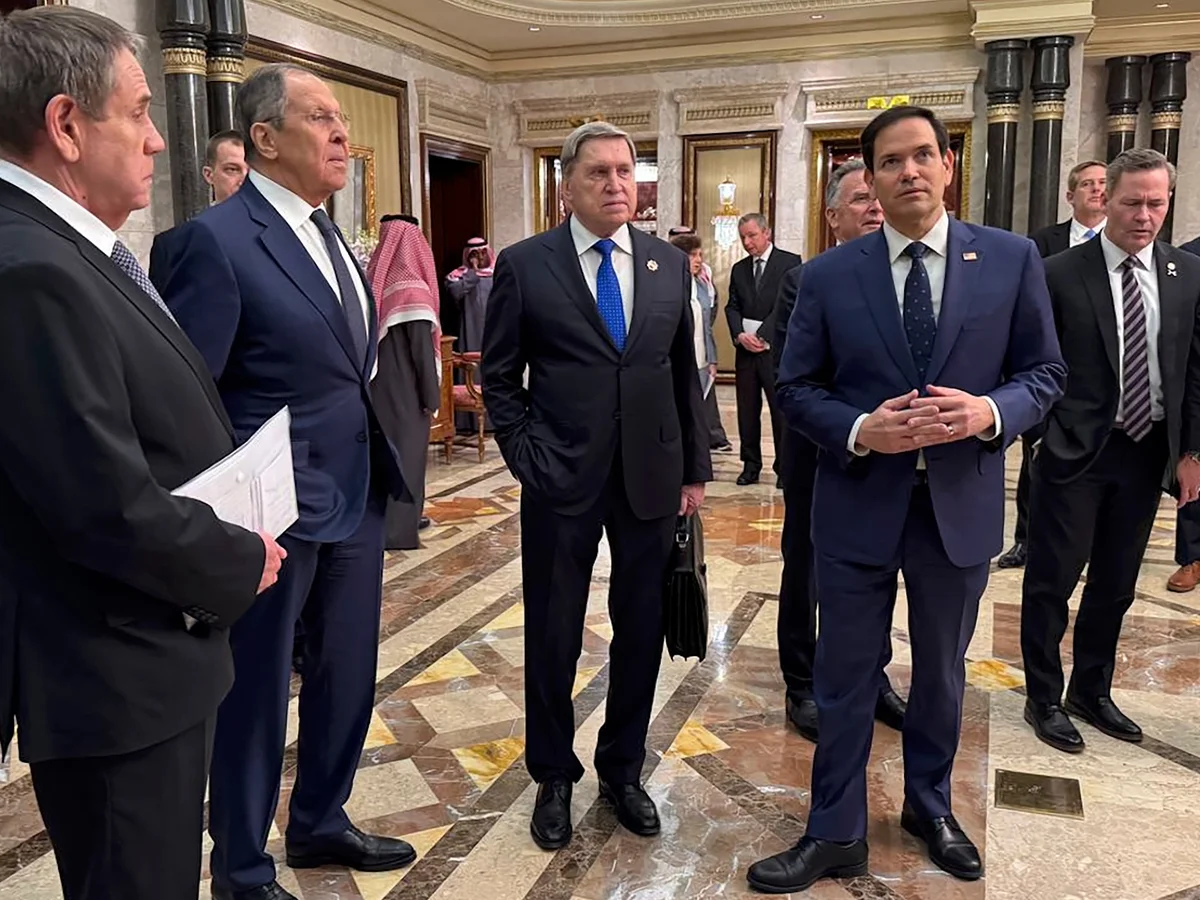
Russia Ceasefire an unexpected turn of global diplomacy, the United States has stepped into a mediator role, hosting high-stakes negotiations in Riyadh, Saudi Arabia, to explore a possible ceasefire between Ukraine and Russia. The two nations, locked in a brutal war for over two years, are now facing mounting pressure—both militarily and economically—to seek alternatives to continued conflict. Although early signals from both sides vary, the fact that discussions are even taking place is a glimmer of hope in a region battered by war and uncertainty.
Diplomatic Momentum Builds in Riyadh
The decision to hold these talks in Riyadh underscores Saudi Arabia’s emerging role as a neutral ground for international diplomacy. The United States, acting as an intermediary, has engaged with both Ukraine and Russia separately. Ukrainian officials have reportedly been more open and cooperative, sharing strategic concerns and humanitarian goals. Ukrainian Defense Minister Rustem Umerov called the meetings “productive” and emphasized that Ukraine is striving for what President Volodymyr Zelensky has often referred to as a “just and lasting peace.”
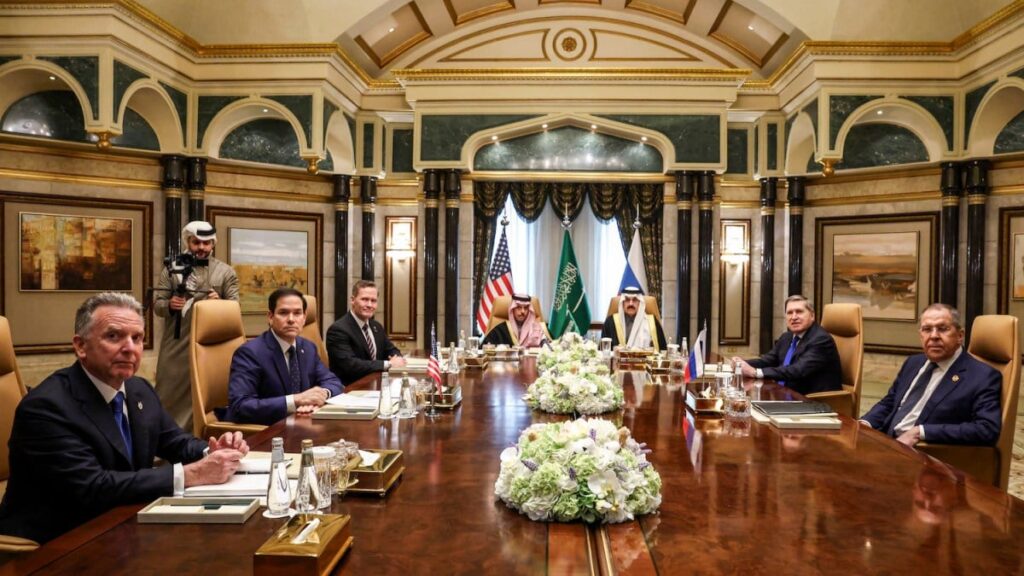
According to sources familiar with the talks, the US has presented a phased plan, beginning with a short-term, 30-day ceasefire focused on protecting civilian lives and critical infrastructure. These preliminary steps are designed to build trust, reduce bloodshed, and create conditions for broader negotiations in the future.
The Human Cost Keeps Mounting
Even as discussions take place in air-conditioned diplomatic halls, the situation on the ground in Ukraine remains dire. The same day talks were initiated, a Russian drone attack on Kyiv tragically killed three civilians, including a five-year-old girl and her mother. The attacks shook the capital and served as a sobering reminder of how far the road to peace still stretches.
President Zelensky, clearly emotional in a televised address, described the attacks as “barbaric” and “cowardly,” reaffirming his position that Russia must halt its aggression before any real progress toward peace can be made. “The one who brought this war must take it away,” he declared, his voice unwavering.
Russia’s Strategic Calculations
The Russian stance on the proposed ceasefire remains more guarded. Kremlin spokesperson Dmitry Peskov described the talks as being in the “early stages,” and Russian President Vladimir Putin has not committed to any concrete outcomes. Russian officials are believed to be weighing the ceasefire against their broader objectives, including the lifting of economic sanctions and guarantees around control of strategic assets like Crimea and the Donbas region.
Putin, known for his calculated political maneuvers, has reportedly put forth several conditions for cooperation—many of which remain unacceptable to the Ukrainian side. These include calls for Western military withdrawal from Eastern Europe, loosening of sanctions, and limited Ukrainian NATO aspirations. Such demands suggest that while Russia may be willing to consider a ceasefire, it intends to do so on its own terms.
Divisions Among International Stakeholders
The involvement of the United States has added a powerful voice to the mediation process, but not without controversy. US envoy Steve Witkoff has stirred debate with remarks that some interpret as overly sympathetic to Russia, including a controversial comment referring to Ukraine as “a false country.” While his statements have drawn criticism, Witkoff maintains that all options must be explored to avoid further escalation, including potential nuclear tensions.
On the other hand, European powers have expressed deep skepticism about a ceasefire without clear consequences for Russia’s actions. UK Prime Minister Sir Keir Starmer has gone as far as suggesting a Western-led military presence to enforce peace, though US officials have rejected the idea as provocative and potentially destabilizing.
These differing viewpoints among allies reveal a larger challenge: even if Ukraine and Russia agree to terms, securing a stable and lasting peace will require cohesive international support—something currently in short supply.
Why These Talks Matter Now
What makes this moment significant is the confluence of internal and external pressures facing both combatants. Ukraine’s resources are stretched thin, and public morale is wavering after years of war. Meanwhile, Russia faces mounting economic strain and growing internal discontent, exacerbated by international sanctions and military losses.
The United States’ involvement signals a broader acknowledgment that the war’s continuation serves no one. The White House, increasingly concerned about global stability, energy markets, and the risk of a broader regional conflict, sees these talks as a critical opportunity to reduce tensions.
Furthermore, the choice of Riyadh as the venue is symbolically important. Saudi Arabia, once primarily seen as a regional oil power, is increasingly asserting itself as a diplomatic broker. This shift in role could set the stage for a new kind of global diplomacy, where previously peripheral nations become central to solving some of the world’s toughest challenges.
A Fragile Yet Vital First Step
While the path to peace is long and uncertain, the mere fact that high-level discussions are underway is a powerful signal. For the millions of Ukrainians affected by the conflict—displaced families, orphaned children, and grieving parents—these talks are more than political theater. They are a vital first step toward reclaiming safety, dignity, and hope.
It remains to be seen whether this momentum can be translated into real-world outcomes. But as the world watches and waits, the message from Riyadh is clear: despite deep divisions and hardened battle lines, diplomacy is still possible. And in a time of war, the possibility of peace is a powerful and positive force worth believing in.

