

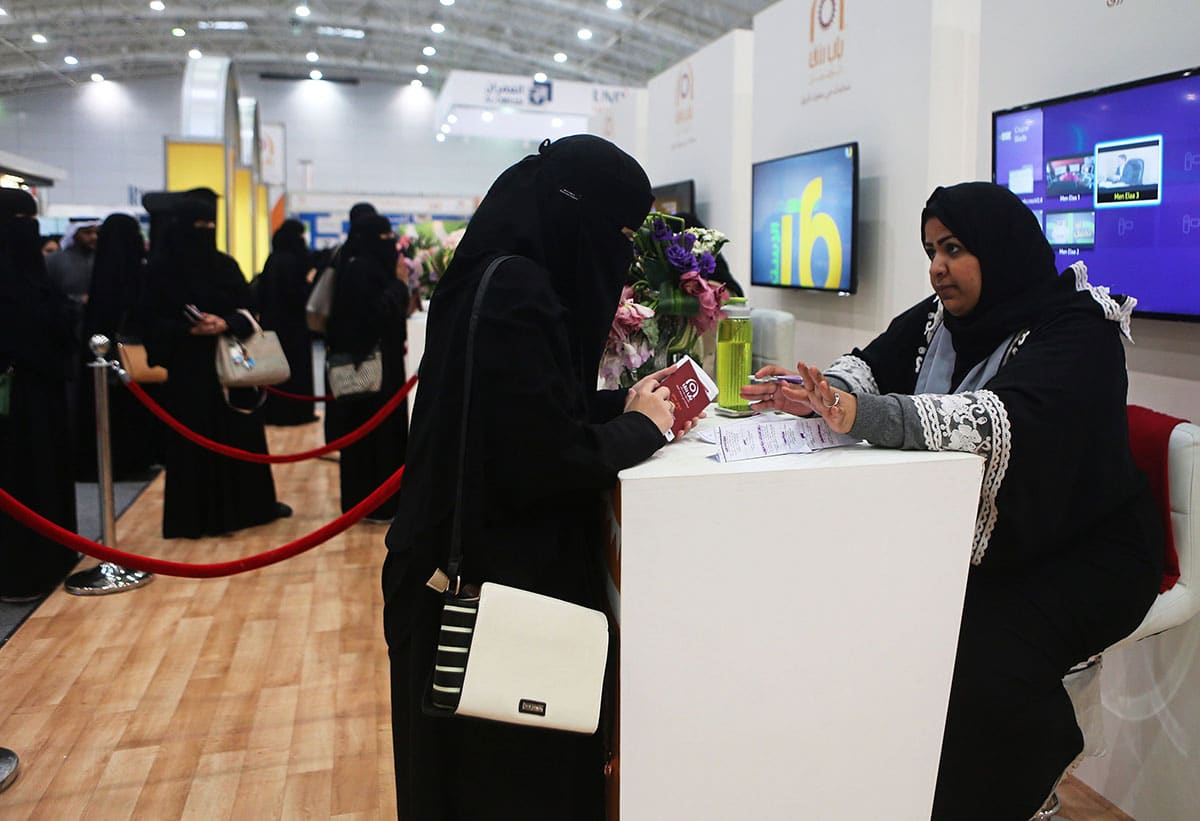
Saudi Arabia is witnessing one of the most profound social and economic transformations in its modern history. At the heart of this change is the remarkable rise of women in the Saudi workforce. In just over a decade, female labour force participation has surged from marginal levels to over 35 percent, redefining what work, opportunity, and empowerment look like in the Kingdom.
This shift is not merely about employment numbers. It represents a broader recalibration of gender norms, national priorities, and economic ambition. Women are no longer standing on the sidelines of Saudi Arabia’s development story; they are actively shaping it.
A Look Back: When Participation Was Limited
For much of the past, women’s participation in Saudi Arabia’s formal workforce was constrained by a mix of legal, cultural, and structural barriers. Employment opportunities were concentrated in a few sectors such as education and healthcare, with limited career progression and leadership representation.
Mobility restrictions, guardianship rules, and workplace segregation further reduced access to jobs. Many women were educated and capable, yet the system around them did not fully allow their skills to translate into economic participation.
As a result, the Kingdom relied heavily on a male-dominated labour market, leaving a significant portion of its human capital underutilised.
Vision 2030: A Turning Point for Women’s Employment
The launch of Vision 2030 marked a decisive shift in Saudi Arabia’s approach to development. Recognising that economic diversification required the full participation of society, the leadership placed women’s employment at the centre of reform.
Clear targets were set to increase female labour force participation, not as a symbolic gesture, but as a strategic economic necessity. The message was unmistakable: women are essential partners in national growth.
This vision triggered a cascade of policy reforms that dismantled long-standing obstacles and opened doors across sectors.
Policy Reforms That Changed the Game
Several landmark reforms accelerated women’s integration into the workforce. Restrictions on mobility were lifted, allowing women to drive and commute independently. Labour laws were amended to prohibit gender discrimination and support equal pay frameworks.
Workplace regulations were modernised to encourage mixed-gender environments, while childcare support initiatives made it easier for mothers to balance careers and family life. Flexible working arrangements and remote work options also expanded access to employment.
Together, these reforms transformed not only laws but mindsets, signalling that women’s professional ambitions were both legitimate and supported.
Education Meets Opportunity
Saudi women have long excelled academically, with female enrolment in higher education often surpassing that of men. What changed was the alignment between education and employment.
New pathways emerged for women to enter sectors such as finance, technology, tourism, logistics, law, and engineering. Internship programmes, vocational training, and private-sector partnerships bridged the gap between qualifications and careers.
The result was a workforce of highly skilled, motivated women ready to contribute across industries previously closed to them.
The Private Sector Embraces Change
Private companies played a critical role in translating policy into real jobs. Incentives encouraged firms to hire Saudi women, invest in inclusive workplaces, and promote female leadership.
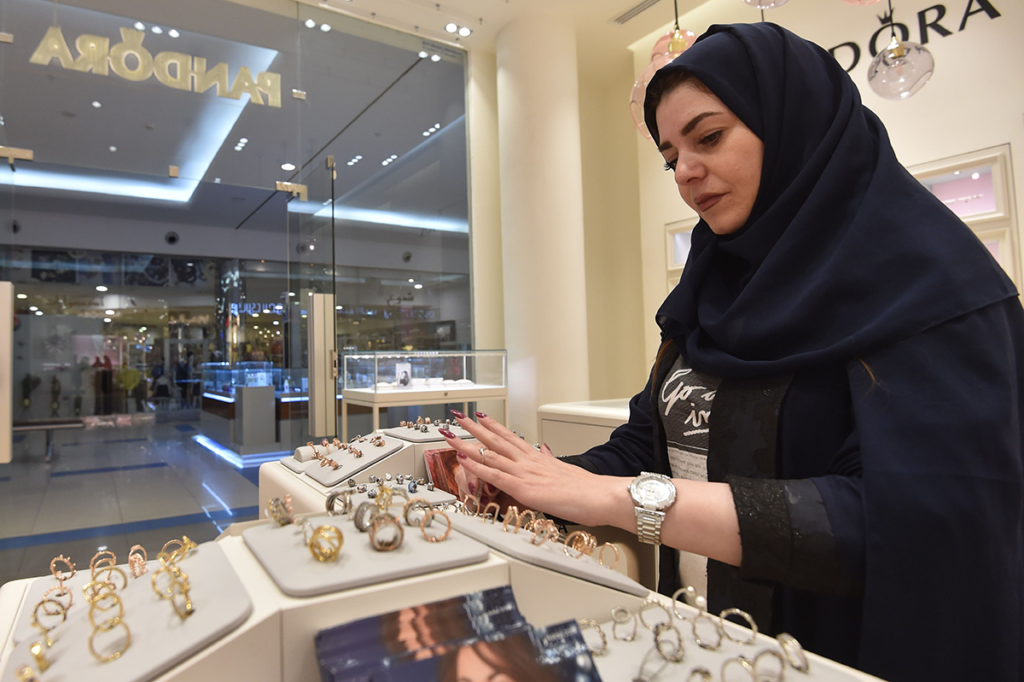
Retail, hospitality, fintech, and creative industries became early adopters, followed by energy, construction, and advanced manufacturing. Female entrepreneurs also flourished, launching startups that generated jobs and innovation.
Today, women are visible across boardrooms, shop floors, laboratories, and corporate offices, challenging outdated stereotypes about “suitable” work.
Economic Impact: Growth Beyond Numbers
The rise of women in the Saudi workforce has delivered tangible economic benefits. Higher household incomes have boosted consumption, while a larger labour pool has increased productivity and competitiveness.
Women’s participation has helped reduce reliance on foreign labour, strengthened the middle class, and supported economic diversification goals. Studies consistently show that inclusive labour markets drive stronger, more resilient economies.
In Saudi Arabia’s case, empowering women has proven to be not just socially progressive, but economically smart.
Redefining Gender Norms and Social Expectations
Perhaps the most profound change is cultural. As women enter the workforce in record numbers, perceptions of gender roles are evolving within families and communities.
Young girls now grow up seeing women as engineers, executives, pilots, and entrepreneurs. Fathers and husbands increasingly view women’s careers as assets rather than exceptions.
This shift is gradual but powerful, embedding equality not through slogans, but through lived experience.
Leadership and Representation on the Rise
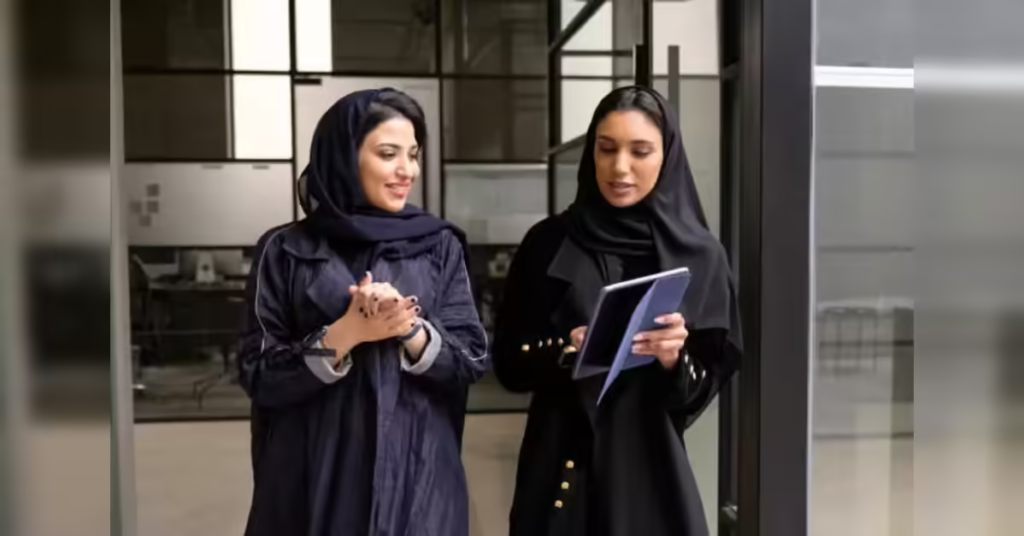
Women are no longer confined to entry-level roles. Increasingly, they are stepping into leadership positions across public and private institutions.
From senior management to government advisory roles, female voices are shaping policy, strategy, and innovation. This visibility matters, creating role models and reinforcing the idea that leadership is defined by capability, not gender.
While representation is still evolving, the trajectory is unmistakably upward.
Challenges That Remain
Despite extraordinary progress, challenges persist. Gender pay gaps, sectoral concentration, and career advancement barriers have not disappeared entirely.
Balancing work and family responsibilities remains a concern for many women, particularly in demanding industries. Continued investment in childcare, mentorship, and leadership development will be essential.
Acknowledging these challenges does not diminish success; it ensures that momentum is sustained and inclusive growth continues.
A Workforce Transformation With Global Significance
Saudi Arabia’s experience is now watched closely across the region and beyond. The speed and scale of change offer a compelling case study in how policy, vision, and social will can reshape labour markets.
The rise of women in the Saudi workforce demonstrates that cultural identity and economic modernisation can progress together, reinforcing rather than contradicting each other.
Looking Ahead: The Next Chapter
As participation rates continue to climb, the focus is shifting from access to impact. The next phase will emphasise quality jobs, leadership pathways, and innovation-driven careers.
Women are expected to play a central role in emerging sectors such as artificial intelligence, renewable energy, advanced tourism, and the creative economy.
The story is no longer about whether women belong in the workforce. It is about how far their influence will extend.
Conclusion: A Transformation That Redefined a Nation
The rise of women in the Saudi workforce is one of the Kingdom’s most defining achievements of the past decade. It reflects courage, reform, and a belief in the power of inclusion.
What began as a policy objective has become a social transformation, reshaping the economy and rewriting expectations for generations to come.
Saudi women are not just participating in the future. They are building it.
Do follow Gulf Magazine on Instagram.
Also Read – How Saudi Arabia Slashed Unemployment Before Vision 2030

