

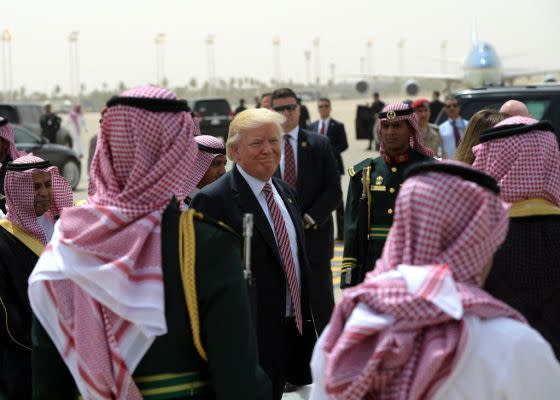
Riyadh, Saudi Arabia –High-Stakes Gulf President Donald Trump has embarked on a high-profile diplomatic mission across the Gulf, beginning in Saudi Arabia. Marking the first major international trip of his second term, this visit sets the stage for a transformative phase in U.S.–Middle East relations. With stops scheduled in Qatar and the United Arab Emirates after Riyadh, Trump’s Gulf tour aims to secure massive economic deals, reinforce strategic military alliances, and explore diplomatic breakthroughs in a region under global scrutiny.
Warmth and Grandeur in Riyadh
From the moment Air Force One touched down, it was clear this would be no ordinary diplomatic visit. A squadron of six Saudi F-15 fighter jets escorted the president’s plane through the skies, an unmistakable symbol of the kingdom’s deep-rooted alliance with the United States. On the ground, Trump was welcomed with elaborate ceremonial hospitality by Crown Prince Mohammed bin Salman. Lavender carpets, traditional Arabic coffee, and royal brass bands greeted the U.S. delegation, setting the tone for a visit designed to celebrate partnership, not just politics.
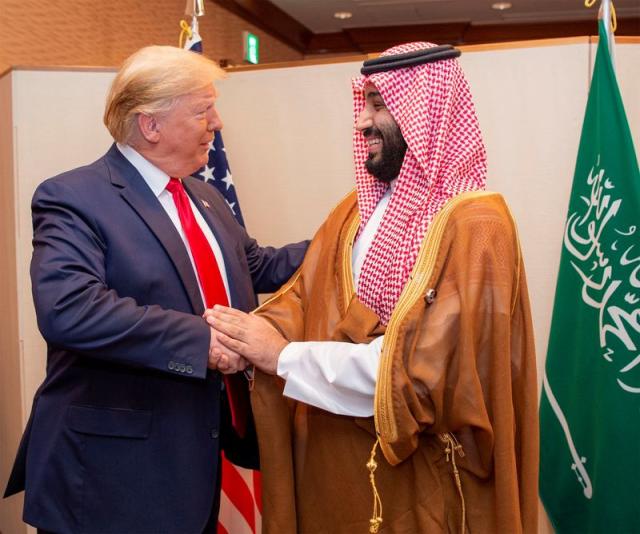
The streets of Riyadh were awash with U.S. flags and vibrant digital billboards projecting Trump’s image alongside the Saudi crown prince’s—a powerful public statement of shared vision and renewed commitment.
Focus on Economic Power: The $1 Trillion Vision
A cornerstone of Trump’s visit is economic cooperation, and the numbers being discussed are staggering. Building on a previously pledged $600 billion investment commitment from Saudi Arabia to the U.S. economy, Trump now seeks to elevate this to a bold $1 trillion over the next four years. The Saudi-U.S. Investment Forum, a central feature of the trip, has brought together corporate giants and key policymakers in what many are calling the most consequential economic dialogue between the two nations in recent memory.
Joining President Trump are some of the biggest names in business and innovation. Elon Musk, whose ventures in clean energy and space exploration align closely with Gulf nations’ ambitions, is present to discuss joint ventures. Larry Fink of BlackRock and Ruth Porat from Google have also flown in, signaling an alignment of financial and technological interests on both sides.
Key Agreements and Sectoral Breakthroughs
The economic aspect of Trump’s visit is multifaceted, covering defense, energy, and emerging technologies. Several groundbreaking deals are under negotiation and likely to be formalized during the tour.
In defense, a monumental arms agreement valued at over $100 billion is being finalized. This deal would provide advanced missile systems, drones, and next-generation military hardware to Saudi Arabia, bolstering its national security framework while securing thousands of U.S. manufacturing jobs.
In technology, discussions are underway to build joint AI research hubs, invest in quantum computing, and explore semiconductor production partnerships. These conversations are particularly aligned with Saudi Arabia’s Vision 2030 agenda, which seeks to diversify the kingdom’s economy away from oil dependency and become a global leader in tech innovation.
Energy remains a crucial area of cooperation. While the U.S. is no longer as dependent on Middle Eastern oil, stable energy prices remain vital to the global economy. Leaders are expected to announce a new bilateral energy pact focused on clean energy development, oil market stability, and energy security cooperation.
A Region in Flux: Balancing Progress and Politics
Despite the economic optimism, President Trump’s visit is shadowed by complex regional dynamics. The ongoing conflict in Gaza has claimed tens of thousands of lives, creating immense humanitarian concerns and complicating broader diplomatic goals. While there is hope of normalizing relations between Saudi Arabia and Israel, Riyadh maintains that no formal steps will be taken without significant progress toward Palestinian statehood.
Trump’s delegation has expressed a desire to play a constructive role in facilitating dialogue between the parties. However, this ambition is challenged by distrust among regional players and skepticism from the international community.
Moreover, Saudi Arabia’s recent diplomatic outreach to Yemen’s Houthi rebels, facilitated partly by quiet U.S. engagement, represents a significant shift. Yet, not all American allies are pleased. Israel has voiced its discomfort with some of the new backchannel negotiations involving Iran and Yemen, concerned about potential shifts in the regional balance of power.
Personal Stakes and Public Perception
Trump’s presence in the Gulf isn’t just about politics—it’s also personal. The Trump Organization maintains a growing portfolio of investments in Saudi Arabia, the UAE, and Qatar. These range from luxury resorts and branded real estate projects to proposed new developments in the hospitality and entertainment sectors. While Trump insists he has stepped back from business operations, critics argue these dealings pose ethical dilemmas.
Yet for many Gulf leaders, Trump’s dual identity as a statesman and businessman is seen as a strength. It aligns with their own vision of merging public policy with private sector dynamism, making Trump a uniquely appealing partner in the region.
A Diplomatic Gamble That Could Reshape the Region
This Gulf tour is not just about headlines or handshakes. It is a carefully orchestrated maneuver to position the United States as a long-term strategic partner in a region rapidly evolving both politically and economically. If successful, Trump’s mission could redefine the geopolitical landscape of the Middle East, opening the door to new alliances, peace-building opportunities, and economic transformations with global impact.
While challenges remain, the energy on the ground is unmistakably optimistic. The Gulf is rolling out the red carpet, not just for the spectacle of diplomacy, but for the promise of progress.
A Fragile Calm: Inside the India-Pakistan Ceasefire and Global Diplomacy

