

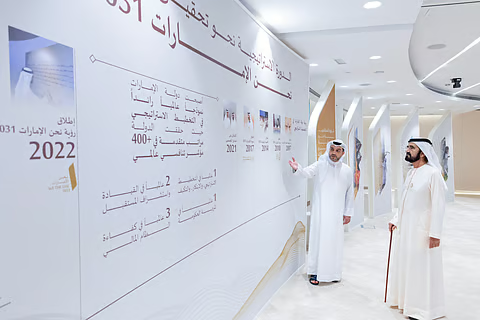
The United Arab Emirates (UAE) has unveiled an ambitious strategic plan for 2031, aiming to revolutionize government operations through the integration of artificial intelligence (AI) and enhanced efficiency. This forward-thinking initiative seeks to redefine success management and regulatory frameworks, positioning the UAE as a global leader in smart governance.
Vision 2031: A New Era of Governance
Under the leadership of His Highness Sheikh Mohammed bin Rashid Al Maktoum, Vice President and Prime Minister of the UAE, the new strategic plan emphasizes the need for a paradigm shift in government operations. Traditional measures of success, such as regulatory strength and procedural complexity, are being replaced with a focus on agility, simplicity, and intelligent resource management.
The plan outlines several key objectives:
- Integration of AI in Strategic Planning: Leveraging AI to enhance decision-making processes and optimize resource allocation.
- Simplification of Government Processes: Streamlining procedures to reduce bureaucracy and improve service delivery.
- Enhancement of Financial Efficiency: Implementing smart technologies to achieve greater financial sustainability.
These objectives align with the broader UAE Centennial 2071 vision, which aims to position the country as a global leader in various sectors, including governance and technology.
AI at the Core of Transformation
Artificial intelligence lies at the heart of the UAE’s strategic plan for 2031. The government recognizes AI’s potential to transform public administration by automating tasks, predicting trends, and providing data-driven insights for better decision-making.
Key initiatives include:
- Development of AI-Powered Platforms: Creating platforms that utilize AI to analyze data and generate actionable insights for policymakers.
- Training and Development Programs: Establishing programs to equip government employees with the skills needed to work alongside AI technologies.
- Collaboration with Tech Industry Leaders: Partnering with global technology companies to access cutting-edge AI solutions and expertise.
These initiatives aim to foster a culture of innovation within the public sector, ensuring that the UAE remains at the forefront of technological advancements.
Smart Efficiency: Streamlining Government Operations
In addition to AI integration, the strategic plan emphasizes the importance of smart efficiency in government operations. This involves adopting technologies that enhance productivity, reduce costs, and improve service quality.
Key strategies include:
- Digitalization of Services: Transitioning government services to digital platforms to facilitate easier access and faster processing times.
- Implementation of Smart Infrastructure: Utilizing IoT and other technologies to create smart cities that offer enhanced services to residents.
- Optimization of Resource Management: Using data analytics to monitor and manage resources effectively, ensuring sustainability and cost-effectiveness.
By focusing on smart efficiency, the UAE aims to create a government that is responsive, transparent, and capable of meeting the evolving needs of its citizens.
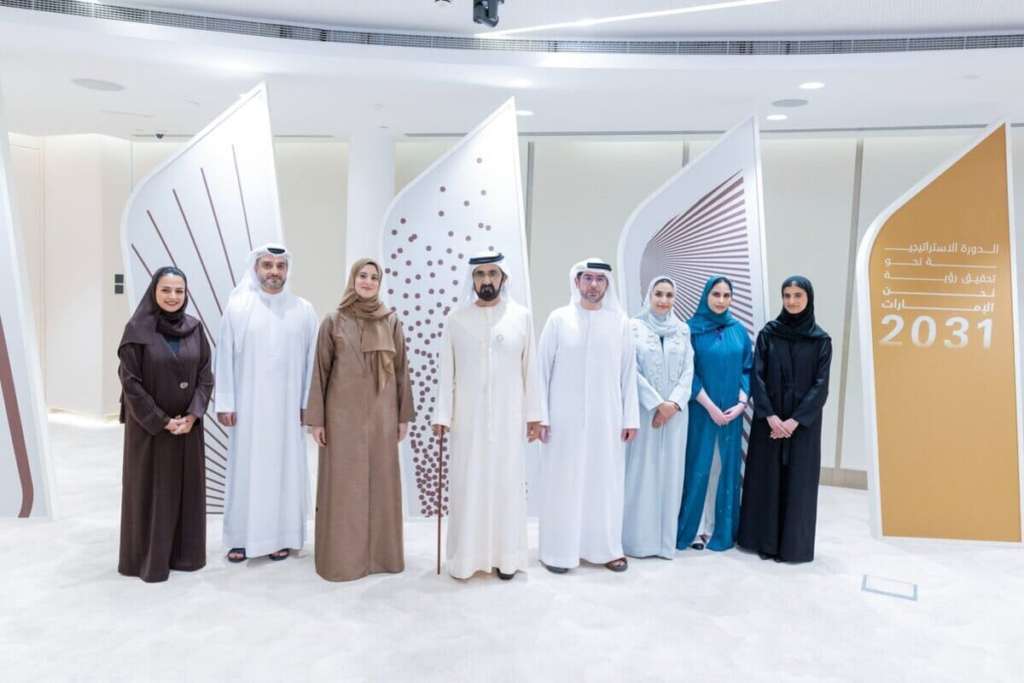
Redefining Success Management
The new strategic plan introduces a redefined approach to success management within the government. Success is no longer measured solely by the number of regulations or the size of administrative teams but by the ability to deliver seamless services and utilize resources wisely.
This shift involves:
- Performance-Based Metrics: Establishing clear performance indicators to assess the effectiveness of government initiatives.
- Continuous Improvement Processes: Implementing systems for regular evaluation and enhancement of government programs and services.
- Citizen-Centric Approaches: Focusing on the needs and feedback of citizens to ensure that government actions align with public expectations.
Through these measures, the UAE seeks to build a government that is not only efficient but also accountable and aligned with the aspirations of its people.
Regulatory Innovation for a Digital Future
To support the integration of AI and smart efficiency, the UAE is undertaking significant reforms in its regulatory frameworks. These reforms aim to create an environment that encourages innovation while ensuring ethical standards and public trust.
Key aspects of regulatory innovation include:
- Agile Regulatory Processes: Developing flexible regulations that can adapt to the rapid pace of technological change.
- Ethical Guidelines for AI Use: Establishing standards to ensure that AI technologies are used responsibly and transparently.
- Support for Innovation Hubs: Creating environments where startups and tech companies can collaborate with the government to develop and test new solutions.
By fostering a regulatory landscape that supports innovation, the UAE aims to attract global talent and investment, further solidifying its position as a leader in digital governance.
Collaborations and Partnerships
Achieving the objectives of the strategic plan requires collaboration between various stakeholders, including government entities, private sector companies, and international partners.
Recent initiatives highlight this collaborative approach:
- AI and Robotics Research Lab: The UAE has partnered with global tech companies to establish an AI and robotics research lab, focusing on developing advanced technologies that can be applied across various sectors.
- Driverless Delivery Vehicles: In Abu Dhabi, the introduction of autonomous delivery vehicles marks a significant step toward smart mobility and sustainable urban innovation.
These partnerships demonstrate the UAE’s commitment to leveraging global expertise and fostering a collaborative environment to achieve its strategic goals.
Looking Ahead: A Smart and Efficient Future
The UAE’s strategic plan for 2031 represents a bold step toward transforming government operations through AI and smart efficiency. By embracing these technologies, the UAE aims to create a government that is not only more efficient but also more responsive to the needs of its citizens.
As the country moves forward with these initiatives, the focus will be on continuous innovation, collaboration, and a commitment to excellence. The success of this strategic plan will serve as a model for other nations seeking to modernize their governance structures and harness the potential of emerging technologies.
In conclusion, the UAE’s strategic plan for 2031 sets a clear path toward a future where government operations are streamlined, services are enhanced, and citizens’ needs are met with agility and intelligence. Through the integration of AI and a focus on smart efficiency, the UAE is poised to redefine success management and regulatory frameworks, leading the way in digital governance for the coming decade.
Do follow us: Instagram
Read More: Saif Ali Khan’s New Island Home in Qatar: A Safe Haven After Mumbai Attack

