


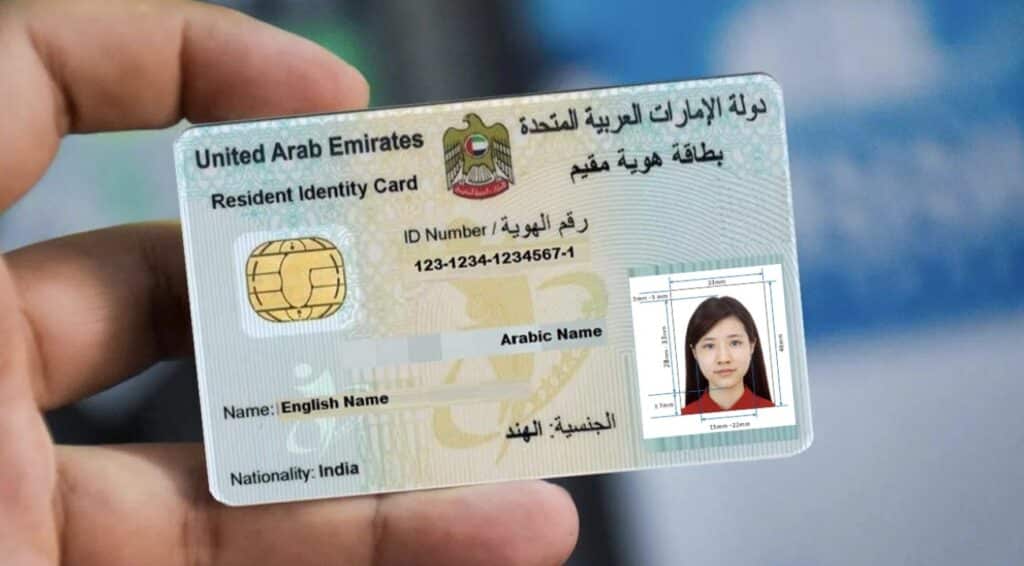
In a bold and futuristic move, the United Arab Emirates (UAE) has officially announced that it will eliminate physical Emirates ID cards and adopt a fully digital biometric identification system. Instead of traditional plastic cards, residents and citizens will now use their facial and fingerprint data as their primary identity — a step that pushes the country closer to a paperless, tech-powered future.
This revolutionary change is spearheaded by the UAE’s Federal Authority for Identity, Citizenship, Customs and Port Security (ICP) and is part of a wider digital transformation plan aimed at enhancing security, simplifying services, and improving user experience across sectors.
What Does This Mean for UAE Residents?
Simply put, you won’t need to carry an Emirates ID in your wallet anymore. Whether you’re checking into a hotel, visiting a hospital, accessing government services, or even traveling through airports, your identity can now be verified using your face or fingerprints.
The new system will be fully integrated with the UAE Pass — the country’s official digital identity app — allowing users to access services quickly and securely through their smartphones.
Why Is the UAE Making This Change?
This initiative is part of a larger national strategy to become one of the most advanced digital economies in the world. The move not only helps streamline services but also boosts data security, reduces fraud, and simplifies daily transactions for both residents and businesses.
According to UAE officials, the biometric system will:
- Reduce reliance on physical documents, thereby saving time and resources.
- Improve identity verification processes, especially at critical points like airports, hospitals, and banks.
- Support the UAE’s vision of becoming a fully digital government, offering 100% paperless services.
How Will It Work?
The biometric ID system uses facial recognition and fingerprint scanning to confirm a person’s identity. This technology has already been successfully deployed at several airports in Dubai and Abu Dhabi, where passengers can pass through immigration without showing a passport or ID card.
Now, the same technology will be applied across the board for all residents and citizens. When you walk into a government building or a hotel, your identity can be confirmed using only your face — no card, no PIN, and no paperwork needed.
Your biometric identity will be securely stored and managed via the UAE Pass app, which already allows users to sign documents, verify identities, and access over 6,000 digital services.
Faster, Safer, Smarter Services
The switch to biometric identity isn’t just about convenience — it’s also about safety. Physical ID cards can be lost, stolen, or faked. Biometric data, however, is unique to each person and far more difficult to forge or misuse.
In daily life, this means:
- At hotels: No need to hand over your ID — your face will check you in.
- At clinics and hospitals: Your medical records can be accessed instantly through biometric ID.
- At banks: Opening an account or verifying transactions becomes quicker and safer.
- For government services: From applying for visas to renewing driving licenses, everything can be done digitally.
When Will It Be Rolled Out?
The biometric identification system is expected to be fully implemented over the next year. The government will gradually phase out physical Emirates ID cards as more people begin using the UAE Pass and biometric services.
Authorities are also planning awareness campaigns to help people understand how to register their biometric data and use the new system safely and securely.
Privacy and Data Protection Concerns
Some residents may have concerns about how their biometric data will be stored and protected. According to UAE officials, data privacy and security are top priorities. The system will follow international standards in cybersecurity and encryption to ensure that personal information remains safe from breaches or misuse.
Data will be stored on government-secured servers, and users will retain full control of how their identity is used. Access to biometric data will only be granted through authorized channels for approved services.
Setting a Global Example
The UAE is not the first country to experiment with digital identity, but it is one of the first to propose completely replacing traditional ID cards with biometric alternatives. The country’s tech-forward approach continues to set an example for the region and the world in terms of innovation, governance, and smart city development.
Digital experts say the UAE’s move could spark a wave of similar transformations in other nations looking to modernize public services, especially as digital identities become more secure, accurate, and efficient.
Final Thoughts
By making this ambitious leap into biometric identification, the UAE is not just enhancing convenience — it’s rewriting what identity means in the digital age. With facial recognition, fingerprint scanning, and a centralized digital platform, daily tasks like visiting the doctor, boarding a plane, or renewing your residency could become seamless and instant.
As the rollout begins, residents can expect smoother interactions with both public and private sectors, all while knowing that their identity is safer than ever — and all they need is their face.

