


In a significant diplomatic move, Ukrainian President Volodymyr Zelensky has postponed his scheduled visit to Saudi Arabia. This decision comes in response to recent discussions between the United States and Russia regarding the ongoing conflict in Ukraine, talks from which Ukraine was notably excluded.
Exclusion from Critical Talks
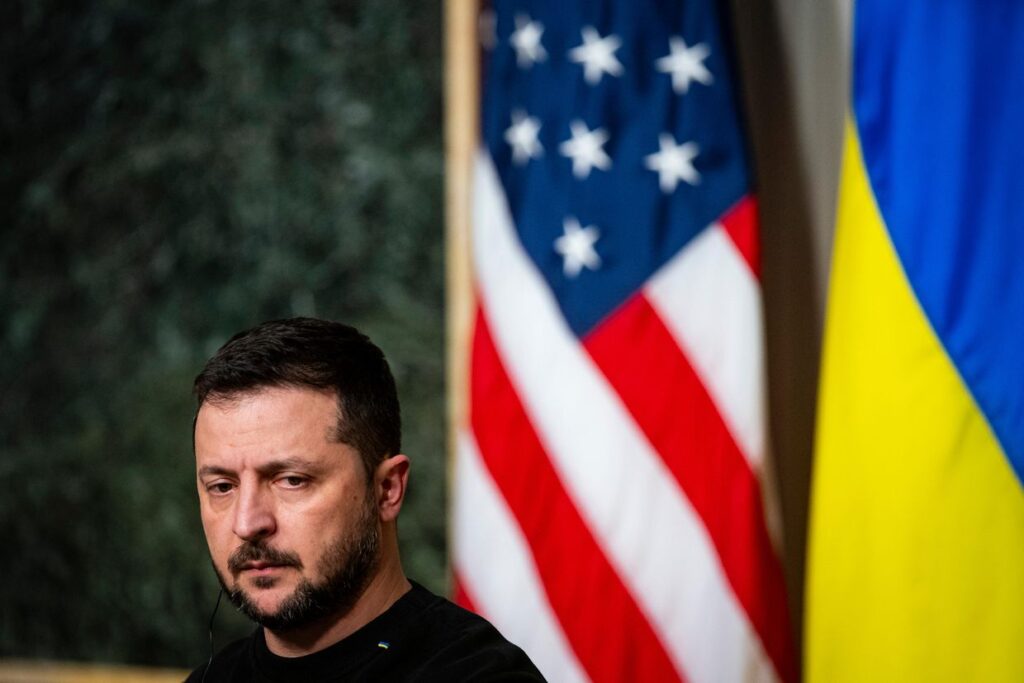
The United States and Russia recently held high-level discussions in Riyadh, Saudi Arabia, to explore potential resolutions to the war in Ukraine. These talks aimed to improve strained bilateral relations and address the prolonged conflict that has gripped Eastern Europe since Russia’s full-scale invasion of Ukraine in February 2022. However, the absence of Ukrainian representation in these negotiations has raised concerns in Kyiv and among its European allies.
President Zelensky expressed his disapproval, stating that Ukraine had not been invited to the U.S.-Russia discussions in Saudi Arabia. He emphasized the importance of Ukraine’s involvement in any decision-making process related to its sovereignty, asserting that no agreements concerning the war should be made without Ukraine’s direct participation. The Ukrainian government has been vocal about its position that any peace talks must include Ukraine as a key stakeholder to ensure that its national security and territorial integrity are protected.
Postponement of Saudi Arabia Visit
Originally scheduled for February 18, President Zelensky’s visit to Saudi Arabia was intended to strengthen diplomatic ties and discuss regional security issues. However, in light of the unexpected U.S.-Russia talks in Riyadh, he chose to delay his trip to avoid any appearance of endorsing negotiations conducted without Ukraine’s participation. The visit has now been rescheduled for March 10, allowing Ukraine to reassess its diplomatic strategies and engagement in response to the evolving geopolitical landscape.
The decision to postpone the visit underscores the complex dynamics at play in global diplomacy. Saudi Arabia, as a key regional power, has been increasingly involved in international peace efforts, hosting talks and mediating discussions on global conflicts. While Ukraine values its relationship with Saudi Arabia, Zelensky’s move signals Kyiv’s firm stance against being sidelined in critical negotiations that concern its future.
International Reactions
The exclusion of Ukraine from these high-stakes discussions has elicited strong reactions from various international stakeholders. European leaders have expressed unease over the possibility of any agreements being reached between the U.S. and Russia without Kyiv’s input. German Chancellor Olaf Scholz reiterated the necessity of including Ukraine in any peace process, warning against decisions being made “over the heads of Ukraine.” European nations, particularly those bordering Russia, are deeply invested in ensuring that any resolution respects Ukraine’s sovereignty and does not compromise security in the region.
Many NATO members share concerns that a separate agreement between Washington and Moscow could lead to concessions that might not align with Ukraine’s long-term security interests. They fear that any compromise made without Ukraine’s direct involvement could set a dangerous precedent, undermining the principle of national sovereignty and territorial integrity.
U.S. and Russian Perspectives
The United States has long been a strong supporter of Ukraine, providing military aid, financial assistance, and diplomatic backing. However, the Biden administration has also been exploring diplomatic avenues to manage tensions with Russia, particularly as the war drags on with no clear resolution. While Washington has reassured Kyiv of its commitment, the recent talks in Riyadh indicate that there may be a strategic shift in approach toward engaging with Moscow on broader security issues.
Russian officials, on the other hand, have welcomed these discussions, seeing them as an opportunity to assert their position on Ukraine and other geopolitical matters. Russian Foreign Minister Sergey Lavrov has repeatedly argued that the West should acknowledge Russia’s security concerns, particularly regarding NATO’s presence in Eastern Europe. Moscow has been pushing for a diplomatic solution that would limit NATO’s influence near its borders while securing economic and political concessions.
While details of the U.S.-Russia talks remain undisclosed, analysts speculate that topics such as potential ceasefire agreements, economic sanctions, and future diplomatic engagements were among the key points of discussion. However, the absence of Ukrainian representation casts doubt on the legitimacy and effectiveness of these negotiations. Without Ukraine’s buy-in, any proposed resolutions may struggle to gain traction on the ground.
Ongoing Conflict and Future Implications
Despite diplomatic efforts, the situation on the ground in Ukraine remains dire. The war has resulted in thousands of civilian casualties, widespread destruction of infrastructure, and an ongoing humanitarian crisis. Russian drone and missile attacks continue to target Ukrainian cities, with Kyiv ramping up its defenses and counteroffensives in response.
Ukraine has consistently called for stronger international support, urging Western nations to provide advanced military aid, including fighter jets, long-range missiles, and additional air defense systems. While NATO and European allies have provided significant military assistance, Kyiv remains concerned that war fatigue among Western nations could lead to decreased support over time.
The exclusion of Ukraine from these pivotal negotiations not only undermines its sovereignty but also sets a concerning precedent for international diplomatic practices. Many fear that if a U.S.-Russia deal is reached without Ukraine’s input, it could lead to a situation where compromises are made at Ukraine’s expense, potentially forcing Kyiv into an unfavorable settlement.
Zelensky’s Next Steps
In the coming weeks, Ukraine is expected to intensify diplomatic engagements to ensure its voice is heard in future discussions. Zelensky has maintained that Ukraine remains open to peace talks but only under conditions that ensure the full restoration of its territorial sovereignty. He has also called for a global peace summit, urging international allies to support a diplomatic resolution that aligns with Ukraine’s interests.
The rescheduled visit to Saudi Arabia in March will likely serve as an opportunity for Zelensky to reinforce Ukraine’s diplomatic standing and secure further support from Middle Eastern partners. Saudi Arabia has played a crucial role in mediating global conflicts and could serve as an important ally in Ukraine’s pursuit of a fair and just resolution.
Conclusion
As the war in Ukraine enters its third year, the stakes remain high for all parties involved. The recent U.S.-Russia talks in Riyadh highlight the ongoing geopolitical maneuvering as global powers seek to navigate a path toward stability. However, Ukraine’s exclusion from these discussions raises serious questions about the future of peace negotiations and whether a lasting resolution can be achieved without the direct participation of the nation at the heart of the conflict.
For now, Zelensky’s postponement of his Saudi Arabia visit underscores Ukraine’s determination to assert its agency in international diplomacy. With tensions running high and the war showing no signs of immediate resolution, the coming months will be critical in shaping the next phase of this prolonged conflict. The world will be watching closely to see how diplomatic efforts unfold and whether Ukraine can secure the support needed to achieve a just and lasting peace.

